Archive for the ‘Christ is Lord’ Category
Worship is warfare
Peter Leithart writes:
Worship is not a retreat to a safe haven where we can offer praise to God in blissful forgetfulness of the challenges before us. Worship is part of the Church’s engagement with the world, one of the chief strategies in our combat. . . . When [the Lord of Hosts] is exalted in our praises, He becomes a terror to our enemies, leaves the field strewn with corpses, and makes the valley of battle into a Valley of Berecah.
Douglas Wilson writes:
So the world is not conquered with a sword. The instruments of conquest, the weapons of our warfare, are Word and Sacrament. The worship of the Church is not a religious meeting in a room, with the assembled seeking to escape from the world outside. . . . We have a battering ram about which the lords and princes of this world know nothing, and every Lord’s Day we take another swing at their gates with it. We do this as we sit down at the Table which He has prepared for us in the presence of our enemies. The Church hearing the Word preached is the Church hearing the terms of conquest. The Church at the Lord’s Table is the church ruling.
See also: Noah, Far as the curse is found, Let us go up.
The future of Jesus
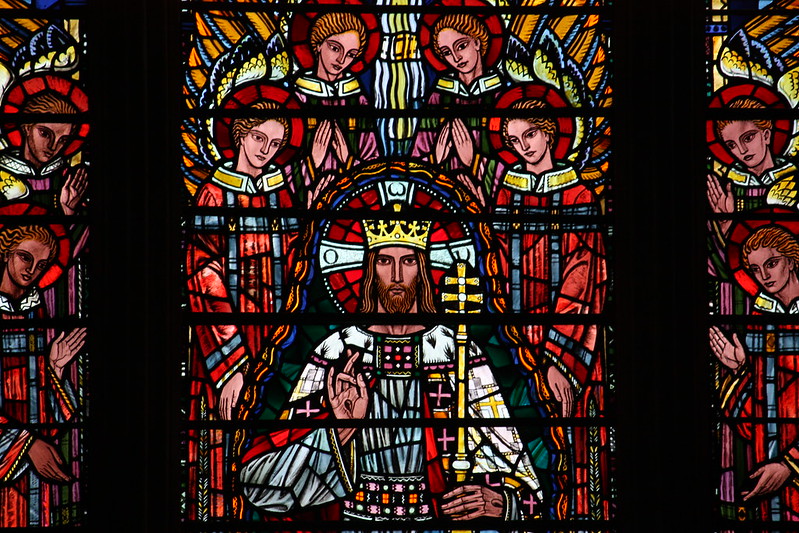
I was a long while in moving from amillennialism to postmillennialism. But like many theological watersheds, more and more I saw it everywhere, and more and more it fit with other convictions.
My friend Mark Horne argues briefly for postmillennialism in a helpful series of posts, “The future of Jesus:”
- The future of Jesus
“God’s objective in Jesus is the release of the human race from slavery — not just slavery from death but slavery from every other tyrant as well.” - Few to be saved?
“It is too small a thing to God for him to show mercy on and bring salvation to a minority of humanity.” - Are there earthly blessings to be expected in the future?
“There is our hope: Not only the return of Jesus, but the victory of His Spirit and His Gospel giving the whole world true knowledge of him and of his Word, bringing about the end of wickedness and an end to the weariness of frustrated labor.” - Will he make a difference in the world?
“If there was ever a time when God allowed human societies to exist apart from loyalty to him, that time is over. God now expects everyone to acknowledge the Lordship of His Son and to obey Him.” - So if Jesus rules, why isn’t life better?
“When the Church does not teach everything Christ has commanded we should expect him to withdraw peace and prosperity from the world. This does not disprove that he reigns and has a plan for future victory; it proves that he does.” - To three thousand-PLUS generations
“So when we read in Esther 8 about a world-wide vindication of God’s people resulting in massive proselytization ‘from India to Ethiopia,’ we should realize that that was rather minimal compared to what is to happen now that Jesus has come and died and risen again.” - The feast of booze
“Jesus loves you and your Christian family but he did not die and rise again to have you in his private party. He died and rose again not only for you but also for the whole world. He wants everyone to come to his table and he will eventually ensure that the whole world is present at his feast.” - When is Jesus king of kings?
“Jesus is not becoming king at some point in the future. To be more pointed, he is not becoming the king of all nations on earth at some point in the future. He already is.” - Who inherits the land/earth?
“How is it Christian to claim that the meek won’t inherit the earth?” - Who will kings acknowledge?
“Kings are called upon to praise the Lord. We are promised that they will all give thanks to God.” - Defending the future of Jesus
“The whole reason there is an ‘antithesis’ between God and Man is because they are claiming the same territory at the same time. The new city begins now. Or rather, began then.”
Ascension
Today is Ascension Day, the day Jesus ascended to his seat at the right hand of the Father. Psalm 24 describes Jesus’s ascension in victory and our ascension in worship:
The LORD is King of earth’s domain,
The world and all that dwell therein.
Rejoice, O Zion’s sons and daughters,
For it stands firm by His decrees;
He founded it upon the seas,
Established it upon the waters.Who shall ascend the hill of God,
Stand in His holy place, and laud
The LORD, who lives and reigns forever?
He who withstands the wicked’s lure,
Who has clean hands, whose heart is pure,
Who keeps his oaths and does not waver.Rich blessings shall be his reward,
And vindication from the LORD,
Who is the Rock of his salvation.
Such are the men who seek the face
Of Jacob’s God, so rich in grace.
From Him is all their expectation.Lift up your heads, you arch and gate;
O ancient doors, rise up and wait;
Let Him come in, the King of glory.
Who is that King of glorious fame?
The LORD Almighty is His Name,
He who in battle goes before me.Lift up your heads, you arch and gate;
O ancient doors, rise up and wait;
Let Him come in, the King of glory.
Who is that King, in glory great?
The LORD of hosts, Him we await.
The LORD, He is the King of glory!
This is from an Anglo-Genevan Psalter. You can hear Michael Owens sing the tune, although I prefer a more lively tempo. There is a great rendition in French at David Koyzis’s Genevan Psalter blog. The versification above is by Wolter van der Kamp.
Far as the curse is found
In his chapter in The Glory of Kings, “Holy War Fulfilled and Transformed,” Rich Lusk deals with the unique way in which God led Israel to prosecute war in the conquest of Canaan. Lusk contrasts Israel’s conquest of Canaan against the much more restrictive demands God placed on their ordinary warfare. He goes on to establish how the conquest is typological for Jesus’s conquest of the world through the cross and the church. The church engages in battle and wrestling through our worship, prayer, sacrifice, evangelism, discipleship and ministries of mercy.
 There is a kind of double meaning in the idea of something being devoted to God: it may entail either punishment or acceptance, judgment or justification. While cities were sent up in smoke as a mark of God’s judgment, the system of offerings shows a positive meaning of ascension in smoke. The penalty and judgment for sin came into play when the animal was put to death. After its death, the animal’s ascension in smoke was a positive figure of its entering into God’s presence on behalf of the worshipper. The underlying Hebrew for “whole burnt offering,” in fact, literally means “ascension offering.” Likewise, Jesus, our offering for sin, in his ascension brings us to the Father in union with him as our representative. So, today, the church wields the sword of the Spirit, the word (Eph. 6:17; Heb. 4:12), waging a campaign of devoting the world to God by spreading the fire of the Holy Spirit, life born out of repentance. Since Pentecost, we are living sacrifices.
What struck me in thinking about this was Israel’s refusal to enter into Canaan, and how this may serve as a caution for the church. Consider Numbers 13:25-14:38. Clearly God promised to give them the land, and they saw firsthand his power to fight for them. And yet they still did not believe. Ultimately, God forgave their sin, but they had to endure the consequence of their unbelief through forty years of wandering and death. In a way, they were given only as much as they believed God for: they did not believe God could or would fight for them, so they do not enjoy the victory that God had promised.
What does this mean for the church? Jesus is the high priest whose death brings about an atoning transition from judgment to grace (Numbers 20, 35), and immediately opens the way to the gospel’s conquest of the world (Numbers 20:29-21:3). Jesus’s ascension is his coronation; the Father has now put everything in subjection under his feet (Ps. 8, Heb. 2). Here are a few ways we can work at walking in faith in Jesus’s lordship:
- Jesus is lord of nations, kings and magistrates, so our responsibility as citizens does not stop at voting and prayer: we call them to account to Jesus and seek to disciple them
- Our children belong to Jesus and his Spirit is at work in them, so our parenting owes as much to the pattern of discipleship as to evangelism
- Jesus is lord of our work, so we can work in any lawful vocation “as for the Lord,” knowing that he is beginning a new work of subduing the earth regardless of the seeming futility we see on our own time horizons
- Jesus is lord of all, so we can confidently appeal to unbelievers on the basis that they live under his rule in his realm, that everything they enjoy is a blessing from him, and that true joy and blessing is to be found in welcoming him and his lordship rather than despising him.
And belt out some Christmas songs this holiday season. Joy to the world!
Invictus
The Westminster Confession of Faith reads:
God from all eternity, did, by the most wise and holy counsel of His own will, freely, and unchangeably ordain whatsoever comes to pass; yet so, as thereby neither is God the author of sin, nor is violence offered to the will of the creatures; nor is the liberty or contingency of second causes taken away, but rather established.
We confess that God ordains or decrees everything, but in a way that establishes individual freedom and responsibility. At one level this is simply a mystery to us, but it is possible for us to go a little deeper. Authorship and artistry — or, as Tolkien puts it, sub-creation — have been for me a helpful analogy for God’s sovereignty over creation[1]. It does not even occur to us to accuse Tolkien of tempting or causing Gollum to sin, or of any injustice or violence toward Gollum. Even recognizing Tolkien’s authorship, we do not doubt that Gollum did what he did of his own free will, or that he deserved his end. Philosophers call this compatibilist free will, but it just means that we do what we want to do. An author or artist’s decreeing or ordaining her work is categorically different from ordinary causation or compulsion within the world of the work itself. In fact, the author’s decrees are just what establishes and upholds a structure of causality and responsibility within the world of her work. Otherwise it would be utter chaos.
This also means that God’s very being and existence are categorically different from ours; to use the philosophical term, he is transcendent. This is perhaps the main reason that Anselm’s argument fails: we cannot induct our way outside of the story; we cannot build a ladder that jumps right off the page. We need God to reveal himself to us.
There are some fun ways to explore this creator-creature distinction in story and art. In simplest form, characters might speculate about or comically defy the author. Pushing the analogy to its limits, we end up with self-reference, a multiplicity of levels, and illusions. This gets us into the realm of what Douglas Hofstadter calls the “strange loop,” and as Hofstadter points out, Escher’s work is a great example of all this. But the analogy does break down: our stories are only shadows of reality, and Escher’s lizards and hands and birds only have the illusion of reality. Only God enters his creation in the flesh and allows it to act upon himself.
 While talking with the men from my small group this week, it struck me that this analogy of sub-creation gives literary references to God a double or ironic meaning. When an unbelieving author’s characters rail against or reject God’s authority, they are in one sense railing against him, and so he is undermining his own argument. In his very attempt to boast in human autonomy, he reveals the absurdity of that rebellion. He cannot escape his dependence on and submission to God any more than his characters can escape their obvious dependence on and submission to him.
This gives us an alternate reading of the poem Invictus. Instead of seeing it as the poet’s raising his fist against God, we can equally see it as the character within the poem’s raising his own fist against the poet. In that light, the poem becomes childish and petty.
But who are you, O man, to answer back to God? Will what is molded say to its molder, “Why have you made me like this?”
The idea that we could transcend the boundary between ourselves and our author, or somehow cast off a dependence on him that is fundamental to our very existence, is absurd. Far better to humble our hearts and enjoy where he has set us.
Oh, taste and see that the Lord is good!
Blessed is the man who takes refuge in him!
The analogy of authorship might prove instructive to us in other ways, too. The fact that God’s sovereignty is what establishes causality and responsibility rescues us from futile determinism. And seeing God as an author certainly emphasizes his power over his creation. It is a small thing for him to write of the weaving of his world in seven days, or of a world-wide flood rather than a regional flood: we don’t have to wring our hands over miracles that are hard for our creaturely minds to conceive. And as much as there may be degrees of fellowship with or separation from God, this also suggests that it is misguided to divide creation and our experience into the natural and the supernatural, secular and spiritual, nature and grace. Because of God’s intimate and personal involvement in his story, the overlap between the natural and supernatural is entire and complete. You cannot possibly escape God’s sovereignty, lordship, or grace. That in turn lays the foundation for a robust common grace.
Where shall I go from your Spirit?
Or where shall I flee from your presence?
Finally, this analogy also suggests that, while there is great value in a reductionist approach to understanding God’s world, there is comparatively greater value in seeking to understand God’s word and world holistically, to grasp the sweep of story and persons.
See also: Proof of the non-existence of God.
[1] Yes, this does contradict the WCF quote on the face of it. See John Frame’s distinction between what you might call a proximate and an ultimate sense of authorship, which is what I’m getting at by distinguishing between decree/ordination and causation/compulsion.
Faith acquisition
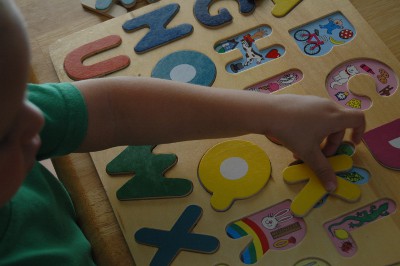 John 3:1-15 reveals that there is an inescapable spiritual component to our children’s growing in faith. But this passage also insists that we can rarely peel back the layers to see what is happening, even in our own lives, much less our children’s. So it should not be surprising to find that the way God brings about spiritual life and growth, in us and our children, actually rides along the very natural and seemingly mundane tracks of hearing, seeing, tasting, doing. Consider:
And these words that I command you today shall be on your heart. You shall teach them diligently to your children, and shall talk of them when you sit in your house, and when you walk by the way, and when you lie down, and when you rise. — Deut. 6:6-7
Train up a child in the way he should go; even when he is old he will not depart from it. — Prov. 22:6
Oh, taste and see that the Lord is good! Blessed is the man who takes refuge in him! — Psalm 34:8
What is striking about these and other passages is that they speak of our children’s acquiring faith in God and learning to live in his household no differently than we would speak of how they acquire language, or how they come to know and love and trust us as their parents. This is because faith is a language: faith understands and speaks of ourselves and the entire world as being related to God in particular ways. Jesus, in whom all things hold together, is more real and immediate a part of his world than anything in it. So while we cannot see him, his constant activity can be seen everywhere to someone who speaks the right language. To anyone else, it is mere gibberish.
Therefore it is not vain repetition to teach our children to say “Jesus is my king and savior,” “God has forgiven my sins,” or “Jesus will always keep me;” any more than it is vain repetition to teach them to say “Daddy,” “this is a chair,” “that is blue,” or “Mr. S. is our mayor.” This is how they learn about both Jesus and the world that he has given to us. And, just as we talk in terms of stages of learning language (“he’s learned his primary and secondary colors,” or “he knows where his pancreas is”) rather than absolutes (“he’s learned English!”), we should speak in terms of stages of learning faith (“she’s really starting to bubble over with gratitude”) rather than absolutes (“she’s converted!”). Faith and language are things to be increasingly exercised rather than inert states of being.
So we teach our children simply to say “Jesus is …” and “Jesus does …” because that is the language of faith. After all, when we speak of Jesus’s world, we simply say “what color is that?” or “what letter is that?;” we do not say “do you believe that color is blue?” or “do you believe that letter is ‘K’?” Because of this, we can confuse our children (and ourselves) if we speak in indirect terms like “do you believe in Jesus as your savior?” rather than simply saying “Who is your savior?” By speaking a more indirect language than faith speaks, we make faith out to be something magical, and make it seem like getting that magic right is just as important as simply knowing and trusting Jesus. And without meaning to do so, this makes Jesus to be something less real than blueness and chairs and letters. But he is far more real than those. The best learning is by doing, and so the best learning to believe in Jesus is actually believing in Jesus — not believing in the supposed power of belief.
Finally, we do not worry that language will become a mindless habit for our children. Neither should we worry that all this Christian talking and living will become a mindless habit. There are some ways in which we expect a mature language and faith to become self-conscious, but it is the essence of language and of childlike faith to be unselfconscious, a simple confidence. The real danger is that this habit and language of faith will be uncultivated and cease to be a habit altogether! We do not want to banish habits — what we want is to cultivate all those delightful habits that a persevering life is simply full of.
See also:
Choose your own assurance
The forest is deep, but it is neither dark nor silent. Even last night’s sounds and the glimmerings of moonlight spoke peace and not terror. You and your mule are more than halfway home, and the promise of feasting quickens your step.
You hear a hoofbeat and voices approaching. Moments later your king and his guard rein their horses before you.
Do you:
- Complain about the violence inherent in the system? Go to page 42.
- Pause to wonder if you got everything in proper order when you swore fealty to him ten years before? Go to page 60.
- Whisk off your cap and look up, glad to see your lord and protector? Go to page 77.
Walking
 My pastor recently posed the question, “What do you say when your child says, ‘Mom, I’m a Christian’?” He warned against discouraging or stumbling our children by telling them “we’ll wait and see.”
Perhaps you are uncomfortable calling your children Christians, although Scripture uses the word simply to mean one who is discipled. Regardless, it is not enough to appropriate the name “Christian;” we point beyond it, reminding them and ourselves that faith is a daily walking as much as a starting. So we help them to see all the privileges and responsibilities of belonging to Christ. We are repeatedly saying things like: “Isn’t it so good to . . .”
- . . . be forgiven
- . . . have our sins washed away
- . . . have God as our father
- . . . have God as our provider
- . . . belong to God
- . . . belong to Jesus
- . . . be a part of God’s family
- . . . rely on Jesus
- . . . have Jesus as our savior
- . . . have life in Jesus
- . . . be joined to Jesus
- . . . have Jesus as our king
- . . . have the Holy Spirit to help us love and obey
- . . . have the Holy Spirit to comfort us
- . . . serve God
- . . . obey God
This is simply part of fanning into flame — urging our children to grow and continue and delight in these things that are a part of obedient faith. It is such a delight to know, trust and obey a king who is so great and so good to us! God has designed for our children to trust us instinctively, just so that we can help them to see his goodness and to trust him instinctively now, and with more understanding over the years. Jesus even points to a child’s instinctive, joyful, care-free trusting as an example for us in our own faith.
Some of these things are true even for the hardest of unbelievers — Jesus is king over all the earth, and we are to obey God. Part of our children’s and our own walking in faith is simply seeing, delighting and resting in what is already true, rather than chafing or cursing. “Confess with your mouth that Jesus is Lord and believe in your heart that God raised him from the dead, [and] you will be saved.”
In the way
 Last November I posted a quote from John Loftness on parenting with faith in God and his promises for our children. But faith always has legs; “therefore how we act,” as Loftness says. I have three small children. What difference does it make that I know God is at work in them, that he has been at work from the very beginning?
- We teach them [1], [2] to name Jesus as “our Lord” and to confess that “he died for our sins and pleads with God for us.”
- When we pray, we teach them to name God as “our Father” and to look to him for provision and forgiveness. And we rejoice in his forgiveness and provision! God is far more lavish even than Mommy and Daddy in his mercy and blessing.
- We teach and expect them to sing to our savior and king, at home and at church.
- We teach and expect them to walk in the fruit of the Spirit. With every bit of good fruit we see, we rejoice and encourage them that this is God at work in them.
- We teach and expect them to obey cheerfully. Repentance for sin and rejoicing in God’s forgiveness and acceptance are also a key part of this.
- Whether or not they participate in the Lord’s supper, we teach them to thank Jesus for cleansing them from sin with his blood, and for making them a part of God’s family.
Not that we have already obtained this!
Are we training our children to be little hypocrites? Absolutely not! Rather:
- Scripture gives us great confidence that the Holy Spirit is already at work in our children, and our task is one of fanning into flame.
- The Christian life is lifelong repentance and faith. While regeneration is absolutely necessary, it is likely in the case of our children that pinpointing it will be futile. The gardener diligently tends his garden before he can even see the sprouts; and as they grow, he tenderly cares for, trains and prunes them, without knowing whether they will survive, so that they may survive. In the same way, we train our children to walk in daily repentance, faith and obedience.
- Similarly, there is a reason that Proverbs 22:6 does not instruct us to lead our children to the way, but rather train them in the way. Christian nurture is not preparation for a future driver’s exam; it is a continuous going deeper. We love our savior and king; there is absolutely no question that he is our trustworthy savior and the king of the world; and faith, repentance and obedience are simply what it looks like to love him.
 I gotta have my orange juice.
Creation
with 9 comments
But we know better. By Scientific observation and inductive reasoning we can prove the existence of enormous negative page numbers. We know that inductive reasoning functions as incontestable proof, because we are the keepers and guardians of the sacred truth that all worlds are impersonal machines and not stories. Worlds have no plots, and are filled only with particles, not characters. Creationists are stupid. So are all authors, artists, composers and poets — they are all conspiring in a tremendous lie about worlds and Science (all rise!).
Written by Scott Moonen
August 28, 2012 at 8:55 am
Posted in Biblical Theology, Christ is Lord, Commentary
Tagged with art, creation, Music, parable, sarcasm, science, story