Author Archive
Sin and trust
David confesses:
I was brought forth in iniquity, and in sin did my mother conceive me. — Psalm 51:5
But he also rejoices:
Yet you are he who took me from the womb;
you made me trust you at my mother’s breasts. — Psalm 22:9Upon you I have leaned from before my birth;
you are he who took me from my mother’s womb.
My praise is continually of you. — Psalm 71:6
Christian parenting embraces both of these truths. We cultivate both the fear of the Lord and the joy of the Lord: repentance and faith as a way of life.
Mark Horne
My list of blogs I read is out of date. I’m probably overdue for a blog purge, so I don’t think I’ll freshen it up right now. But I want to highlight a friend and author who remains among my favorite and most helpful reads: Mark Horne.
You can find Mark writing in a number of places:
- Christendom Unbound, his personal blog
- Hands and Eyes, where he writes to encourage accurate Biblical understanding and application
- He is a writer at Godfather Politics, Political Outcast and The Last Resistance
Here’s two of my favorite posts of his: Paranoia will destroy you and Personal relationship with Jesus. Recently I linked to his series of posts, The future of Jesus.
I appreciate and have been helped by what Mark has to say about the Bible, theology and Christian living, politics and economics. You should check him out.
Nostalgia
nostalgia, n. — the dogged hope that you will somehow survive yesterday’s trials; considering the sufferings of this present time unworthy to be compared with the glory that has passed away from us; a gnawing craving for leeks and onions, accompanied with the realization that you are almost but not quite finished dying to yourself.
See also Mark Horne’s post, The appeal of the past.
Boil
Yesterday there were probably at least a hundred birds — some kind of hawk or buzzard — in the trees near and around our house. They spent most of the day here, but are gone today. I always thought of hawks as solitary birds and never expected to see them gathering in such numbers.
Boil is the collective noun for hawks.
Mountain and sea
 Mark 11:22-25 is a well-known passage on faith:
And Jesus answered them, “Have faith in God. Truly, I say to you, whoever says to this mountain, ‘Be taken up and thrown into the sea,’ and does not doubt in his heart, but believes that what he says will come to pass, it will be done for him. Therefore I tell you, whatever you ask in prayer, believe that you have received it, and it will be yours. And whenever you stand praying, forgive, if you have anything against anyone, so that your Father also who is in heaven may forgive you your trespasses.”
In his commentary on the gospel of Mark, Mark Horne writes about this and the context:
The fig tree story is sandwiched around the story of Jesus’ “cleansing” of the Temple (as it is commonly called). The miracle of the withered fig tree is a parable for Jerusalem and the people of Israel. God wants some fruit from them and he is about to judge them because they are not producing any.
Thus, Jesus’ discussion of prayer in Mark 11:22-26 is not simply a timeless exhortation to have faith and know that all prayers asked in faith will be answered. Jesus is discussing the prayers which the early Church will have to pray in the face of opposition from the Temple Mount. . . . Jesus is not speaking of mountains in general. He has made a point of saying which mountain will be cast into the sea by believing prayer. The “sea” in this case is the same sea Daniel saw in his vision (Dan. 7; cf. Rev. 17:15). Speaking of a foreign invasion as a drowning flood was not uncommon rhetoric for a prophet (Is. 8:7; Jer. 47:2). . . . It is the Gentile nations who will overwhelm Jerusalem as a flood and trample the city underfoot. Just as Jesus cursed the fig tree, so will God deliver the Church through the prayers of the saints.
For this reason, it is important that the persecuted saints not become personally vindictive and hateful. Jesus warns them to forgive all personal offenses. . . (149-150)
Even before Daniel, Isaiah and Jeremiah, we see mountains battling with the sea in Psalm 46:
God is our refuge and strength, a very present help in trouble. Therefore we will not fear though the earth gives way, though the mountains be moved into the heart of the sea, though its waters roar and foam, though the mountains tremble at its swelling. There is a river whose streams make glad the city of God, the holy habitation of the Most High. God is in the midst of her; she shall not be moved; God will help her when morning dawns. The nations rage, the kingdoms totter; he utters his voice, the earth melts. The LORD of hosts is with us; the God of Jacob is our fortress. . . .
Because of Israel’s faithlessness, the city of God was cast into the Babylonian sea in the time of Nebuchadnezzar, but was re-established by God through Cyrus. Antiochus Epiphanes later covered the mountain with the Greek sea. And Jerusalem would be finally cast into the Roman sea in A.D. 70. We see a hint in each case that it is because of the prayers of the persecuted and oppressed that the corrupt and unrepentant mountain is cast into the sea.
Psalm 46 gives hope — not that the sea would be kept at bay, but that there would be protection and restoration for the persecuted, for the faithful and repentant remnant, even though the mountain is destroyed. Just as he had previously desolated the temple (e.g., Ezek. 10), Jesus left the temple desolate of his presence (Mark 13), so that he was no longer “in the midst of her.” He established a new city-mountain in his church (Heb. 12:18ff).
I wonder if there is a subtle ambiguity to this prophetic imagery. For those who do not repent, the raging sea destroys the mountain. But for those who are faithful to Jesus, Jew and Gentile are united in a different and life-giving way, so that in Jesus the two become one tree (Rom. 11), one man and body (Eph.). Both are accomplished through the prayer and witness of the church.
Realizing the pointed nature of Jesus’s imagery here does not lessen the application of this passage to our faith today; on the contrary, it underscores the great power of the praying church.
Christocracy
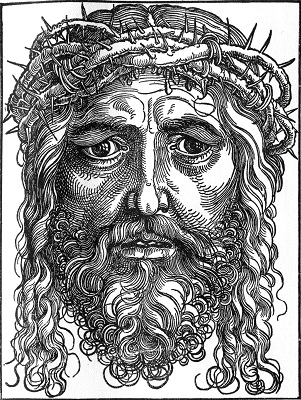 David Field gives a fantastic summary of the notion of a confessionally Christian government in his paper, Samuel Rutherford and the Confessionally Christian State (PDF).
Field asserts a postmillennial perspective, then adds a startling historical observation:
It took 1400 years for 1% of the world’s population to become Christians and then another 360 years for that to double to 2%. Another 170 years saw that grow from 2% to 4% and then, between 1960 and 1990 the proportion of the world’s population made up of Bible-believing Christians rose from 4% to 8%. Now, in 2007, one third of the world’s population confesses that Jesus is Lord and 11% of the world’s population are “evangelical” Christians. The evangelical church is growing twice as fast as Islam and three times as fast as the world’s population. South America is turning Protestant faster than Continental Europe did in the sixteenth century. South Koreans reckon that they can evangelize the whole of North Korea within five years once that country opens up. And then there’s the Chinese church consisting of tens of millions of Christians who have learned to pray, who have confidence in Scripture, who know about spiritual warfare, have been schooled in suffering and are qualified to rule. One day in the next century that Church — tens of millions of Christians trained to die — will be released into global mission and our prayers for the fall of Islam will be answered.
Field then lays out Samuel Rutherford’s vision for Christian constitutional government, and defends it against a number of common objections, concluding that:
Given the purpose, origin, nature, and stuff of the human person, it is clear and important that each human being confess the triune God, recognize Jesus as Lord, and live with the Word of God as his or her supreme authority. To Rutherford and the covenanting tradition, it is no less clear and important, given the purpose, origin, nature, and stuff of human government that each human ruler also confess the triune God, recognize Jesus as Lord, and live with the Word of God as his or her supreme authority.
If you find Field’s essay provocative, here’s some additional reading to consider:
- Abraham Kuyper’s Stone lectures on Calvinism were my first introduction to this viewpoint: the insistence that the nations exist for God, and that the magistrate has a duty to God, whether or not he acknowledges it.
- John Frame lays out some helpful principles in his article, Toward a theology of the state
- Peter Leithart discusses many aspects of a Christian attitude towards the state in his books, Against Christianity, Defending Constantine, and Between Babel and Beast.
- Kuyper introduced the notion of sphere sovereignty, which wrestles with the complementary ways that Jesus’s lordship is expressed in different spheres of life such as the church, family and state. David Koyzis describes how this was developed and advanced by students of Kuyper such as Herman Dooyeweerd.
Hat tip: Uri Brito
Laugh
Here’s a Genevan Psalm (Psalm 2) to belt out on your trip to the polling place. Rejoice always!
Lyrics:
Why do the heathen nations vainly rage?
What prideful schemes are they in vain devising?
The kings of earth and rulers all engage
In evil plots, and in their sin contriving,
They take their stand against our God’s Messiah;
They claim they will not keep His binding chains.
The one enthroned in highest heaven, higher,
Mocks them to scorn, on them derision rains.He speaks to them in righteous, holy wrath;
God vexes them and shows His great displeasure.
“Yet have I set My King upon the path
That upward winds to Zion, My own treasure.”
“‘You are My Son, today You are begotten,’
—I will declare what God has said to Me—
‘And not one tribe will ever be forgotten.
You will receive the world, just ask of Me.'”“‘The nations come; You are the only Heir,
The ends of earth will be Your own possession
And broken with a rod of iron there,
Rebellious pottery comes to destruction.'”
Now serve the LORD, with fear and gladness trembling,
And therefore, O ye kings, seek wisdom here.
How blessed are those who trust without dissembling,
Who kiss the Son and bow in reverent fear.
Noah
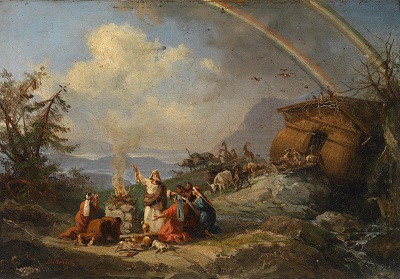 In these articles from 1990 and 1991, James Jordan writes on the meaning of the Noahic covenant and its application today:
A quote:
When the Church is faithful, God will convert the heart of the ruler and he will rule righteously. Conversely, when the ruler is evil and destructive, this means that the Church has not been pleasing to God. The Church is always in charge of culture, and she has been in charge ever since the Flood. We don’t have to take the world and culture over. We already have them. We just have to start using them aright. . . . We don’t change our [rulers] by hypocritically telling them to do things we don’t do. That is the problem with Christian activism and evangelism today. We go door to door telling people they should fear God, when we don’t fear Him enough to do what He says. We tell the government to judge justly, when we refuse to execute justice in Church discipline. We want the government to get out of debt, when the Church owes trillions of dollars in back tithes to God.
Vote
There are a variety of reasons you might vote for someone (or no one!) in a primary or an election (obviously, I write this as an American). Here are a few; perhaps you can think of others.
- I’m voting for someone because I believe he is the best person for the job
- I’m voting for someone because I believe he is relatively righteous and wise. I willingly designate or ratify him to act as as my representative in those decisions entrusted to him.
- I’m voting for someone because, among those candidates likely to win, he is the most acceptable or least unacceptable to me
- I am voting for no one, because in some way I believe the system itself is either unrighteous (e.g., too much power and privilege is arrogated to a particular office), or because in some other way the system has failed (two-party stranglehold, nomination process failure, etc.)
- I am voting for no one, because of the terrible cost-benefit ratio. My vote is unlikely to make a difference, and I can achieve more good by doing something else.
This is all complicated by the fact that voting is a prisoner’s dilemma. Perhaps you would gladly vote according to #1 or #2 as long as everyone else did, but if you expect most people to vote in terms of #3 there is a powerful temptation for you to do so as well. If you were the only person voting, then there would be some ethical obligation to vote in terms of #1 or #2. But since your vote is incredibly diluted, it becomes difficult to attach ethical imperatives to it. Individual votes are so unlikely to determine the outcome of elections that economists frequently describe voting as irrational, at least in terms of the goal of influencing an election outcome. As my friend Mark Horne insightfully observes with a reductio ad absurdum, if we have an ethical obligation to vote, then by implication we have a much greater ethical obligation to put up campaign signs in our yards, something that takes little effort but will have a greater effect on the election outcome.
I am convinced that as Christians we are free to vote according to any of the strategies above. Among these strategies, we do not have warrant to describe any as fundamentally unrighteous or evil, and we cannot bind each other’s consciences to any of them. Instead, we should consider these strategies in terms of wisdom and tactics. This is a matter for persuasion and not invective.
I understand the case for a lesser-of-two-evils strategy, and I have voted that way in the past for presidential elections. This year I am not, for several reasons. Although my vote is statistically unlikely to make any practical difference, I want to use it for its symbolic value. Chiefly, I see my vote as an opportunity to stand for righteousness and against unrighteousness. Obviously, I am speaking in terms of a relative human righteousness and not an absolute righteousness. But both presidential candidates are campaigning to perpetuate gross unrighteousness and foolishness, and voting for a third candidate is a way I can symbolically avoid “sitting with” or casting my lot with the wicked. Even though my vote makes no practical difference, it is still a privilege to participate in the process, and I hesitate to spend this privilege on an unrighteous candidate.
I also want my vote to send a more practical symbolic message. First, I believe that as a general rule, America needs to put the brakes on the growth of political power, and to experience a general shift in power from the national to the local level. By writing in an alternate candidate, I can express my belief that the presidential election should not matter as much as it is currently made out to be. Second, I want to send a message to the Republican party establishment, both that its nomination process is broken, and that I refuse to be taken for a fool. How many times should I be willing to believe false promises to deliver movement on abortion and limited government? I stand for righteousness and not for a party.
Would I prefer one of the two likely winners to the other? Probably. But rooting for a candidate does not require me to vote for him, any more than it requires me to deface my car’s bumper with his sticker. Additionally, I don’t feel confident in tracing out all of the implications of supposedly better and worse paths of unrighteousness and foolishness over the course of time. In the end, I will vote for righteousness but also pray for it, entrusting the outcome to God.
Perhaps you are unpersuaded and will vote for the lesser of two evils; you can do so in good conscience. Certainly, in any case, we have more important opportunities to make a bigger difference:
- We are to participate earnestly in the worship of the church, prayer and evangelism. This is the only means by which any enduring cultural change will come about.
- If you vote, research your local elections at least as diligently as the national ones.
- After the election, write your elected officials at all levels to advocate for righteousness.
Perhaps you have suggestions for my presidential write-in. I’ve not decided yet.
Jesus is king!
The Levir in Romans
 One of the things that happened in the death, resurrection and ascension of Jesus was his vindication in the face of man’s rivalrous judicial execution.
But Jesus’s execution was not just a judicial condemnation of God. At Sinai, Jesus, as Yahweh, espoused his people through the Law, and it is on this basis that the prophets later accused Israel of adultery and called her to repentance and a hope of restoration (e.g., Jer. 31:31ff). In the gospels, Jesus the husband returned to Israel to conduct an inspection of jealousy (Num. 5). Instead of repenting, the guilty bride put her own husband to death as a grotesque way of covering her sin.
Amazingly, God had arranged for just such a death to truly cover (atone for) sin, provided there is repentance.
All of this hearkens back to the death of a previous husband. Adam, the archetypal husband, sinned and died. Eve, the archetypal bride, needed a new husband: Israel needed a new Adam. Eve’s hope, and Israel’s hope, was in the coming seed. So we see here the dual function of the levir (Deut. 25): a new husband, to bring the seed. The bride’s hope, Israel’s hope, was in a new husband, a new Adam. The mother’s hope, Israel’s hope, was in her offspring, the seed. Yet bride Israel destroyed her only hope, by killing her husband; and mother Israel destroyed her only hope, by consuming her own seed (a la Exodus 23:19, etc.).
This may be a helpful framework for approaching Romans 6-8. Paul speaks of Jesus’s death, and our related death to sin and to the law. But in just what way have we died? Here’s my thesis: (1) Israel was espoused to Jesus through the law at Sinai, the former Pentecost; (2) Israel put her husband to death, thereby incurring greater guilt but also dissolving the marriage made through the law; (3) Jesus was raised as his vindication, thereby condemning Israel; (4) a new and resurrected husband was offered to a new Israel, the church: to all individuals who undergo the “death” of repentance; (5) all Israel thus underwent some form of death, whether the death of judgment in AD 70 or the death of repentance; and (6) the church was espoused to her husband through the Spirit rather than the law at the latter Pentecost.
This raises the following suggestions in Romans 6-8:
- We have died to sin in that we have repented, identifying ourselves with the crucified and buried husband rather than the faithless bride
- Baptism (associated with the Spirit), and union with Christ, are both aspects of incorporation into the bride and the bride’s own union with her husband, her head
- The “body of sin” could either refer to our union with Adam, or to Israel herself
- Although the law still reveals God’s will to us (and in fact is said to be written on our hearts), we are not under the law in the sense that the law is no longer the most fundamental form of the church’s communion with her husband. The church is now espoused to Jesus through the Spirit, so that the most fundamental form of communion we have with Jesus is through the Spirit.
- Freedom from the law is only half the picture. We must have a new husband and be faithful to him.
- This all suggests that in Romans 7, Paul is speaking of the historia salutis more than the ordo salutis. He is personifying the bride’s experience — Israel’s experience — more than his personal experience. This is not to say that the passage has no bearing on our experience as individuals; it must, if creation is fundamentally typological. But this is not primarily what Paul has in view; he is speaking of real historical transitions in Jesus’s relationship to his bride.
- This also suggests that there is a corporate reading of Romans 8 that we should layer on top of our individual reading. Jesus not only animates us as individuals through his Spirit, but also his church itself. It is the Spirit who prepares the bride and unites her to Jesus.
 I gotta have my orange juice.