Archive for the ‘Worship’ Category
Facebread
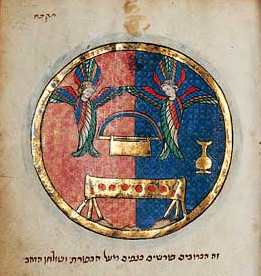 God established that there would be bread set on a table before him in his house “continually” (Ex. 25:30). On this table God also commanded flagons to be set out (Ex. 25:29) filled with beer (Num. 28:7). This continued into God’s new covenant with Solomon (1 Kings 7:48), when God’s presence moved into a palace rather than a tent. Possibly the drink offerings at God’s table also contained wine, especially once Israel entered into the land of promise, as drink offerings of wine begin “when you come into the land” (Num. 15:1-10). Certainly God sets the table in his house today with bread and wine, and the tables in his tent and palace were both modeled after the pattern of his heavenly house (Ex. 25:40, 1 Chron. 28:11-19, Heb. 8:5), where there is surely wine (Matt. 26:29). The bread and beer and wine in God’s house were not reserved exclusively for him; he shared them with the priests who served in his house (Lev. 24:9). God commanded that the table would be refreshed weekly (Lev. 24:8).
The bread in God’s house is called “bread of the presence,” or more succinctly “face bread” or “show bread,” indicating that it rests in front of or in the presence of God. There are twelve loaves of bread on the table (Lev. 24:5), which strongly suggests that it symbolizes the nation of Israel. The table of bread sits before the lampstand, which is fashioned in the style of an almond tree (Ex. 25, 37) and which gives light in front of it (Num. 8:2). The almond design is significant because the Hebrew word for almond also means watcher. This strengthens the suggestion that the bread symbolizes Israel; the bread and lampstand symbolize God’s watching over Israel. Considering the lampstand to be the eyes of a watcher relates to Jesus’s statement that the eye is the lamp of the body (Matt. 6:22, Luke 11:34); our eyes take in and evaluate the world in the same way that the light of a lamp discovers and reveals what is present in a room. Further confirming this reading, elsewhere the seven lamps are explicitly said to be the seven eyes of God (Zech. 4), and Jesus himself is said to have seven eyes (Rev. 5:6).
You might think that in the new covenant, where all God’s people travel all the way in to the most holy place to stand before him in worship (Heb. 4:16), there would be no more need for bread and wine to stand before God to represent us. But the new covenant does have a table filled with bread and wine, and the bread is still said to symbolize Jesus’s body, the church (1 Cor. 10-11). The new covenant in Jesus does not bring an end to ritual; instead, it transforms the ritual in God’s house from one that highlights concentric circles of separation (only priests may enter the holy place, and only priests may eat from this table outside the house) to one that highlights our union with Jesus and with one another (all of God’s people are invited all the way in to his throne room to feast weekly with him).
Thus, weekly communion: in every covenant bread and wine are to be set out continually on the table in God’s house to welcome his people.
Jealousy
 We have said that worship is a kind of tryst between Jesus and his bride. We must also add that it is a tryst at which Jesus expects to find his bride faithful to him. Every Lord’s day is implicitly a day of the Lord. Days of the Lord are a time of inspection and judgment upon the whole world, but particularly a time of inspection for Jesus’s church, because judgment always begins at the house of God.
We see a clear example of this in the book of Revelation, which takes place on the Lord’s day (Rev. 1:10) and which commentators have observed follows the structure of a worship liturgy. Very early in this book Jesus inspects and evaluates seven churches in Asia, and the book itself constitutes an inspection and prophesied judgment upon an eighth church, the apostate house of Israel in Jerusalem.
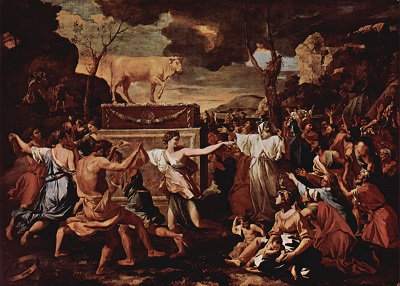
Such inspections follow the pattern of the jealousy inspection in Numbers 5. The bride brings a tribute offering, which consisted of bread (Leviticus 2) and which we know was also typically offered together with wine (Exodus 29). In addition, the bride drinks, and her drinking reveals her faithfulness or faithlessness. While this ritual seems strange, and there are no human examples of its practice, there are many times when Jesus inspects his bride according to this pattern. One clear example is the case of the golden calf (Exodus 32), where Israel is made to drink water with gold dust and those who were unfaithful to Jesus were put to death. Apostate Israel drank the blood of prophets and saints (Matt. 23, Rev. 16-18), which had the result that “their table became a snare and a trap” (Rom. 11 quoting Ps. 69).
In the same way, the Lord’s supper serves as a jealousy inspection of Jesus’s bride. It is a bringing of bread and wine before Jesus that discriminates between those who fellowship with him and those who fellowship with demons (1 Cor. 10). It distinguishes between those who eat in unity and those who eat in disunity (1 Cor. 10–11; Gal. 2), even to the point of bringing about sickness and death.
A faithful church need not fear Jesus’s inspection, his walking among the lampstands; she can confidently enjoy free fellowship with him at his table. And even a faithless church ought to welcome Jesus, for he brings discipline and restoration for those who repent.
Thus, weekly communion: every Lord’s day is inescapably a day of the Lord; as his bride, we must present ourselves for his inspection together with bread and wine. But we do so in eager anticipation of his blessing (even if it arrives through his discipline) and table fellowship. The inspection ends with the tryst.
Tithe
After Abraham defeated the Shemite king Chedorlaomer, he brought a tithe to the priest-king Melchizedek, who served him a meal of bread and wine (Gen. 14).
Similarly, in a preliminary fulfillment of God’s promise to Abraham, the nations of the world brought their wealth to Joseph, who gave them life by providing them bread (Gen. 41:53-57). In addition to this, Joseph seems to have had a position of cupbearer-advisor to Pharaoh (Gen. 44), so that it could be said that Joseph had become both chief baker and cupbearer (Gen. 40), the man of both bread and wine.
Thus, weekly communion: week to week we bring tithes, offerings and tribute to our priest-king (1 Cor. 16:2), and we find that Jesus, the greater Melchizedek (Heb. 5-7) and “son of Joseph” (Luke 4:22, John 6:42), is more, not less, prodigal than the shadows and types that came before him:
Bring the full tithe into the storehouse, that there may be food in my house. And thereby put me to the test, says Yahweh of hosts, if I will not open the windows of heaven for you and pour down for you a blessing until there is no more need. (Mal. 3:10)
Table
One of the things that is happening in the Lord’s-day worship service is that the church is conducting spiritual warfare. We see this throughout the book of Revelation, where it is the church’s songs and prayers that call forth God’s powerful action. We see it, too, in that God uses even the singing of babies to silence his enemies (Ps. 8:2 taken together with Matt. 21:16). Jesus prepares a table for his church in the very presence of her enemies (Ps. 23).
Thus, weekly communion: for when is the church not surrounded by enemies?—and she must always find a table and an overflowing cup there.
Banquet
One of the aspects of the church’s Lord’s-day worship is that we gather as the spiritual army of God to assemble before Jesus our commander. It is a sort of dress review or dress parade before our commander and king, in which we also receive instructions and orders for the coming week.
In the Old Testament, this military review occurred three times a year (Ex. 23:17), on three of Israel’s feast days (Ex. 23:14). This made it equally a kind of military banquet with the commander.
Thus, weekly communion: our dress parade before the king is always accompanied with a banquet.
Tryst
The church gathered is Jesus’s bride. One of the aspects of Lord’s-day worship is that Jesus holds tryst with his bride.
Seemingly every other page of the Bible has something to do with food. Food is the chief avenue for the consummation of fellowship; if we are what we eat, then when we eat together, we become more united. We have already seen Jesus’s desire to eat with his church. Ahashuerus prepares a feast for his people (Esther 1). Esther prepares feasts for Ahashuerus (Esther 5, 7). Joseph prepares a table for his brothers (Gen. 43). Jesus prepares breakfast for his disciples, then instructs them to feed his flock (John 21). Melchizedek prepares a meal (of bread and wine!) for Abraham (Gen. 14), and Abraham later prepares a meal for Jesus and two angels (Gen. 18). In spite of their differences, Jacob and Laban share a meal to seal their covenant (Gen. 31:54). Jesus prepares a table for us in the very presence of our enemies (Ps. 23). Solomon and his bride banquet with and feast upon one another. In a sense, Jesus eats us into his body (Rev. 3:16, also considering we are the loaves of Lev. 24 and 1 Cor. 10), and we eat Jesus (John 6).
Thus, weekly communion: every tryst has its morsels and wine (e.g., Esther 5, 7), and every reunion its repast. Jesus provides not only enough wine when the groom meets with the bride, but also the best wine (John 2).
See also: Famine.
Tribute
As I have previously suggested, the Lord’s supper has much in connection to the tribute, or grain, offering. The priests in Israel offered bread and wine to God every morning and evening (Num. 28:1-9), and additional bread and wine every Sabbath (Num. 28:10). The priests ate portions of the bread (Lev. 2) but had no portion of the wine, which was poured out entirely (Lev. 10:9). And interestingly, the tribute offering, together with the frankincense that accompanied it, is the only offering described as a memorial. Likewise, Jesus calls the Lord’s supper a memorial (1 Cor. 11, often confusingly translated “remembrance”).
Clearly Jesus means us to draw connections between his supper and the daily offering of bread and wine. This is one of the many ways in which the worship of the church has become a sort of transfiguration of temple worship; for example, the church is the temple (1 Cor. 3), we offer a sacrifice of praise (Heb. 13), and we draw near in worship (Heb. 10), which is sacrificial language. Likewise, as a kingdom of priests, we eat bread—and now drink wine!—together with God in his house.
Thus, weekly communion: if every priest offered memorial bread and wine every day that he stood in service in God’s house, how much more should we eat memorial bread and wine every day that we stand together as the house of God?
Knock
 Revelation 3:20 is a well-known verse:
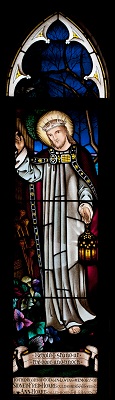
Behold, I stand at the door and knock. If anyone hears my voice and opens the door, I will come in to him and eat with him, and he with me. (Revelation 3:20 ESV)
In spite of the many artistic and evangelistic portrayals of this verse, the context establishes that Jesus is actually knocking at the door of his church, not at the door of individuals. Doug Wilson comments on this, saying that “This is, in the first instance, the door of the church at Laodicea, and then by extension, any church that has people who have drifted into a lukewarm approach to Jesus.”
From elsewhere in Revelation we can establish that a worship service contains prophetic preaching (trumpets) and singing. But those are not present in this verse. Instead, Jesus’s highest intention in meeting with his people is to share a meal with them.
Thus, weekly communion: why open the door but refuse the meal?
Give thanks
While 1 Thessalonians 5 is applicable to all of the Christian life, it has repeated overtones of the weekly public worship service:
- Weekly public worship is one of the several kinds of “day of the Lord” that we can speak of
- As seen in 1 Corinthians, drunkenness and sobriety is particularly applicable to the Lord’s supper
- Our response to church leaders is especially important in the liturgical setting
- Admonishment, encouragement, rejoicing, prayer, thanksgiving, prophecy, and testing-discernment all take place in public worship
- The command to “always rejoice” has particular application to public worship; in Jesus’s presence we have a sort of weekly heavenly furlough from our battle in the world, and are “not [to] be grieved, for the joy of Yahweh is your strength” (Neh. 8:10)
- The focus of the Spirit’s work, and the occasions where we have the most danger of quenching the Spirit, are in the “one another” settings of the whole body of Christ such as public worship
Verse 18 carries similar overtones: in all, give thanks. Translating this as “in all circumstances” or “in all things” is certainly correct; we would not limit its application to public worship. However, it has an intensive application to public worship, where we corporately give thanks to God. And, as the church has recognized throughout history, our giving thanks for the bread and for the wine means that thanksgiving is an appropriate synecdoche for the Lord’s supper.
Thus, weekly communion: in all worship, eucharist!
Enrolled in heaven
The book of Hebrews is critical to understanding the worship of the church under the new covenant. Hebrews 12 contrasts the worship of the church with Israel’s worship at Sinai:
For you have not come to what may be touched, a blazing fire and darkness and gloom and a tempest and the sound of a trumpet and a voice whose words made the hearers beg that no further messages be spoken to them. For they could not endure the order that was given, “If even a beast touches the mountain, it shall be stoned.” Indeed, so terrifying was the sight that Moses said, “I tremble with fear.” But you have come to Mount Zion and to the city of the living God, the heavenly Jerusalem, and to innumerable angels in festal gathering, and to the assembly of the firstborn who are enrolled in heaven, and to God, the judge of all, and to the spirits of the righteous made perfect, and to Jesus, the mediator of a new covenant, and to the sprinkled blood that speaks a better word than the blood of Abel. (Hebrews 12:18-24 ESV)
From this we understand that the church stands in the presence of Jesus as we gather every Lord’s day. But more than that, we stand in the company of angels, and of the saints that have gone before us. So one of the ways that we can remind ourselves that we grieve with hope (1 Thess 4:13) for saints who have gone before us is that we stand shoulder to shoulder with them every week in the worship of our king. We are sent back into the field of battle without them, but we rejoin them at our weekly furlough-feast.
This is another reason that our worship can be without mourning or weeping (Neh. 8:9), since we are spiritually experiencing a foretaste of all things being made right.

