Author Archive
Ascension
Today is Ascension Day, the day Jesus ascended to his seat at the right hand of the Father. Psalm 24 describes Jesus’s ascension in victory and our ascension in worship:
The LORD is King of earth’s domain,
The world and all that dwell therein.
Rejoice, O Zion’s sons and daughters,
For it stands firm by His decrees;
He founded it upon the seas,
Established it upon the waters.Who shall ascend the hill of God,
Stand in His holy place, and laud
The LORD, who lives and reigns forever?
He who withstands the wicked’s lure,
Who has clean hands, whose heart is pure,
Who keeps his oaths and does not waver.Rich blessings shall be his reward,
And vindication from the LORD,
Who is the Rock of his salvation.
Such are the men who seek the face
Of Jacob’s God, so rich in grace.
From Him is all their expectation.Lift up your heads, you arch and gate;
O ancient doors, rise up and wait;
Let Him come in, the King of glory.
Who is that King of glorious fame?
The LORD Almighty is His Name,
He who in battle goes before me.Lift up your heads, you arch and gate;
O ancient doors, rise up and wait;
Let Him come in, the King of glory.
Who is that King, in glory great?
The LORD of hosts, Him we await.
The LORD, He is the King of glory!
This is from an Anglo-Genevan Psalter. You can hear Michael Owens sing the tune, although I prefer a more lively tempo. There is a great rendition in French at David Koyzis’s Genevan Psalter blog. The versification above is by Wolter van der Kamp.
Francesco Bernoulli
Here’s Asher’s first pinewood derby car (with a bit of help from Daddy):

Wish us well!
Thigh
And Jacob was left alone. And a man wrestled with him until the breaking of the day. When the man saw that he did not prevail against Jacob, he touched his hip socket, and Jacob’s hip was put out of joint as he wrestled with him. Then he said, “Let me go, for the day has broken.” But Jacob said, “I will not let you go unless you bless me.” And he said to him, “What is your name?” And he said, “Jacob.” Then he said, “Your name shall no longer be called Jacob, but Israel, for you have striven with God and with men, and have prevailed.” Then Jacob asked him, “Please tell me your name.” But he said, “Why is it that you ask my name?” And there he blessed him. So Jacob called the name of the place Peniel, saying, “For I have seen God face to face, and yet my life has been delivered.” The sun rose upon him as he passed Penuel, limping because of his hip. Therefore to this day the people of Israel do not eat the sinew of the thigh that is on the hip socket, because he touched the socket of Jacob’s hip on the sinew of the thigh. — Genesis 32:24-32
Then I saw heaven opened, and behold, a white horse! The one sitting on it is called Faithful and True, and in righteousness he judges and makes war. His eyes are like a flame of fire, and on his head are many diadems, and he has a name written that no one knows but himself. He is clothed in a robe dipped in blood, and the name by which he is called is The Word of God. And the armies of heaven, arrayed in fine linen, white and pure, were following him on white horses. From his mouth comes a sharp sword with which to strike down the nations, and he will rule them with a rod of iron. He will tread the winepress of the fury of the wrath of God the Almighty. On his robe and on his thigh he has a name written, King of kings and Lord of lords. — Revelation 19:11-16
There is a thigh touched, and a thigh inscribed. Jacob’s wound is connected with blessing, victory and dominion; Jesus’s thigh describes his authority, and the passage assures us of his victory. Jesus’s thigh and robe are connected by his name; Jacob himself is renamed, and I wonder if this is a kind of investiture. The nameless one appears in both passages, so that Jesus is not only the one with whom Jacob wrestles, but also Jacob’s antitype, Israel’s antitype.
The sun rises upon Jacob, and likewise John even goes on to describe the sun:
Then I saw an angel standing in the sun, and with a loud voice he called to all the birds that fly directly overhead, “Come, gather for the great supper of God, to eat the flesh of kings, the flesh of captains, the flesh of mighty men, the flesh of horses and their riders, and the flesh of all men, both free and slave, both small and great.” And I saw the beast and the kings of the earth with their armies gathered to make war against him who was sitting on the horse and against his army. And the beast was captured, and with it the false prophet who in its presence had done the signs by which he deceived those who had received the mark of the beast and those who worshiped its image. These two were thrown alive into the lake of fire that burns with sulfur. And the rest were slain by the sword that came from the mouth of him who was sitting on the horse, and all the birds were gorged with their flesh. — Revelation 19:17-21
I wonder if there is a connection between this and Jacob’s facing Esau as the sun rises. I have not listened to James Jordan’s lectures on Revelation yet — probably he deals with this and more. But I recall he does identify the false prophet named here with the Idumean (Edomite!) Herods. Perhaps Esau’s four hundred men are furthermore representative of Revelation’s kings of the earth; the whole earth was set against Jacob, but he overcame through patience and faith. Likewise, Jesus’s church in Revelation overcomes through persevering in patience and faith.
Life
You are not to boil a kid in the milk of its mother. — Exodus 23:19
On the principle that “it was written for our sake” (1 Cor. 9:10), James Jordan explains this law in his book, The Law of the Covenant: An Exposition of Exodus 21-23 (pp. 190-192):
It is sometimes thought that boiling a kid in milk was a magic ritual used by the Canaanites, and that this is why it was forbidden. The text, however, does not forbid boiling a kid in milk, but in its own mother’s milk. The reason is that life and death must not be mixed. That milk which had been a source of life to the kid may not be used in its death. Any other milk might be used, but not its mother’s.
This law is thrice stated in the Torah (Ex. 23:19; 34:26; Dt. 14:21). It is obviously quite important, yet its significance eludes us. There are many laws which prohibit the mixing of life and death, yet we wish to know the precise nuance of each. . .
We notice that the kid is a young goat, a child. The word only occurs 16 times in the Old Testament. In Genesis 27:9,16, Rebekah put the skins of a kid upon Jacob when she sent him to masquerade as Esau before Isaac. Here the mother helps her child (though Jacob was in his 70s at the time). In Genesis 38:17,20,23, Judah pledged to send a kid to Tamar as payment for her services as a prostitute. In the providence of God, this was symbolic, because Judah had in fact failed to provide Tamar the kid to which she was entitled: Judah’s son Shelah. Judah gave his seal and cord, and his staff, as pledges that the kid would be sent, but Tamar departed, and never received the kid. When she was found pregnant, she produced the seal and cord and the staff, as evidence that Judah was the father. The children that she bore became her kids, given her by Judah in exchange for the return of his cord and seal and his staffs. Finally, when Samson visited his wife, he took her a kid, signifying his intentions (Jud. 15:1).
These passages seem to indicate a symbolic connection between the kid and a human child, the son of a mother. (Indeed, Job 10:10 compares the process of embryonic development to the coagulation of milk.) The kid is still nursing, still taking in its mother’s milk in some sense, Jacob and Rebekah being an example of this. The mother is the protectress of the child, of the seed. This is the whole point of the theology of Judges 4 and 5, the war of the two mothers, Deborah and the mother of Sisera. Indeed, the passage calls attention to milk. The milk of the righteous woman was a tool used to crush the head of the serpent’s seed (Jud. 4:19ff; 5:24-27). How awful if the mother uses her own milk to destroy her own seed!
. . . Accordingly, one of the most horrible things imaginable is for a mother to boil and eat her own child. This is precisely what happened during the siege of Jerusalem, as Jeremiah describes it in Lamentations 4:10, “The hands of compassionate women boiled their own children; they became food for them because of the destruction of the daughter of my people.” The same thing happened during the siege of Samaria, as recorded in 2 Kings 6:28ff. In both passages, the mother is said to boil her child.
We are now in a better position to understand this law, and its placement in passages having to do with offerings to God. The bride offers children to her husband. She bears them, rears them on her milk, and presents them to her lord as her gift to him. Similarly, Israel is to present the fruits of her hands, including her children, to her Divine Husband. She is not to consume her children, her offerings, or her tithes, but present them to God. The command not to boil the kid in its own mother’s milk is a negative command; the positive injunction it implies is that we are to present our children and the works of our hands to God.
Jerusalem is the mother of the seed (Ps. 87:5; Gal. 4:26ff.). When Jerusalem crucified Jesus Christ, her Seed, she was boiling her kid in her own milk. In Revelation 17, the apostate Jerusalem has been devouring her faithful children: “And I saw the woman drunk with the blood of the saints and with the blood of the witnesses of Jesus.” Her punishment, under the Law of Equivalence, is to be devoured by the gentile kings who supported her (v. 17).
There are some obvious but also subtle ways that American culture consumes its children:
Our practice of abortion is clearly consuming our children for our own benefit. We are to sacrifice ourselves for the sake of our children, not to sacrifice our children for the sake of ourselves. Abortion is cannibalism.
Mark Horne explains that “democracy with public debt is the economic system that makes it rational for adults to eat their children.”
I wonder, though, if over a century of individualistic, conversionistic tendencies in the evangelical church have helped to enable this consuming of children. God’s own covenant name, transcending covenants old and new (Ex. 34:6-7), assures us that he intends to show mercy to our children. But the evangelical church has tended to view its infants and children as fundamentally alienated from God instead of belonging to him. We have tended to view parenting more as evangelism than discipleship; we have given our children the impression that God’s forgiveness is harder to come by, and harder to be sure of, than mommy’s and daddy’s; we have withheld from them baptism’s designation of the family name “Christian,” as well as the nourishment, joy and fellowship of the family meal, in some cases until late in their teens; we have thus taught them that God requires a sufficiently sincere and intellectual faith instead of simple trust. This has produced a very modern tendency to wish one was baptized at a later age — as though salvation depended on understanding and maturity more than faith! We teach them many songs about God’s rescuing them out of rebellion, but none about his causing them to trust in him before their birth (Ps. 22, 71, etc.). The widely applauded testimony, the one seen as particularly incisive, is that they have finally come to know God on their own terms in their late teens or in college, not that they have feared God from their youth. Thus, we have taught them to despise small beginnings, confusing conversion with the very normal experience of maturing and growth. As a result, we have led them to believe not only that they are aliens and outcasts from the kingdom, but even that they must in some ways turn and become like adults in order to enter the kingdom of heaven. While perhaps well intentioned, our fear of false assurance robs them of genuine assurance; we withhold the kingdom from those to whom it belongs, starving and quenching the work of the Spirit. And although it is true that the evangelical church has largely taught the salvation of her infants who die, yet we have almost always seen this as an unusual or exceptional work of God rather than an ordinary part of the Spirit’s work in nurturing Christian children. In short, we have taught both our children and the world that infants and children are second-class citizens of God’s kingdom, if they are citizens at all.
One of the crucial ways that the church resists abortion is in how we parent.
See also: Poythress on indifferentism and rigorism; and Leithart’s book, Against Christianity.
Psalms
I wrote the following material for a hymn and Psalm sing.
Introduction
 The Psalms were Israel’s hymnal. Little is said about the use of music in corporate worship before the time of David; the emphasis was on offerings and sacrifices, Sabbaths and festivals. The coming of the king ushered in a liturgical revolution. Under the guidance of the Spirit, David reorganized the Levites and featured music prominently in worship. Even today, we speak of offering a sacrifice of praise, and the Psalms are as much a treasure to Jesus’s church today as they were to Israel.
Abraham Kuyper once said that “there is not a square inch in the whole domain of our human existence over which Christ, who is Sovereign over all, does not cry: ‘Mine!'” And this is true. The Psalms confess this truth over every area of our lives; to sing them is to see and confess and invite Jesus’s involvement in our whole life. He is lord of our sorrows and joys, trials and triumph, deaths and resurrection. He is lord of our possessions and bodies, lord of our children, lord of nations and kings and of history itself. It is good, very good, to belong to him.
We’ve chosen some Psalms from the Genevan psalter, which was compiled by Calvin with the help of others. This French Psalter was first used by the persecuted Huguenots, but its lively tunes have been put to use in many languages.
Psalm 2
Psalm 2 is a Messianic Psalm, referring to Jesus. Jesus is the anointed one (Messiah, Christ), the son, the stone uncut by human hands (Daniel 2) who dashes the nations into pieces and whose kingdom shall never be destroyed. Jesus still calls his church to disciple the nations; we command kings, presidents, governors, representatives and magistrates to bow before him and serve him.
Speaking of this Psalm, Calvin says that “All who do not submit themselves to the authority of Christ make war against God. . . . He who shows himself a loving shepherd to his gentle sheep, must treat the wild beasts with a degree of severity either to convert them from their cruelty, or effectually to restrain it.”
Everyone will experience some kind of death. Jesus himself suffered death for our salvation and life. He requires his people to pass through the life-giving death of confession, repentance and submission. Those who refuse to do so will suffer the never-ending death of his wrath.
Psalm 24
Psalm 24 is another Messianic Psalm, and its theme is ascension. Our worship is an ascension: just as the pleasing aroma of offerings ascended into God’s presence, we ascend into God’s presence as we draw near to worship him. He is actually enthroned on our praises.
But Jesus himself ascended. He is our ascension offering, bringing us forgiveness and cleansing and drawing us into his presence. This Psalm particularly highlights his ascension in victory: he is the one who defeated all his enemies, even sin and death, and entered the gates in victory to be enthroned at his Father’s right hand. Fundamentally, it is only in him and his victory that we ourselves can ascend.
Psalm 68
Psalm 68 has been called the marching song of the French reformation, sung by the persecuted Huguenots. Their singing this Psalm so outraged and frightened the Catholics that its singing in public, and eventually its whistling, was outlawed. This Psalm celebrates God’s might and power, which he uses to provide for his church, convert many of his enemies, and destroy those enemies who will not repent.
David uses a wealth of biblical symbolism and imagery here. Some examples to consider are the use of rain and water as a picture of salvation and life; the mountain and sky as symbols of God’s heavenly throne, and of approaching God in worship; rival mountains as symbols of false worship; and wild bulls as rebellious leaders.
Psalm 71
Psalm 71 may be a continuation of Psalm 70. David’s emphasis here is on his trust and dependence on God in every season of life, in every circumstance. Though he is old and beset by enemies, he recalls God’s unfailing faithfulness to him even before his birth, and he calls on God to keep his promises to defend and restore him. Because of his confidence in God, he is full of joy and praise in the midst of his trials.
This is the Christian vision of the good life, the life that we desire for our children: to have never known a time when Jesus was not near, and to be so deeply rooted in him that no trial can touch our joy.
Psalm 73
Psalm 73 dramatizes our struggles with doubt and envy. When the wicked prosper and God’s people suffer, is it really worth it to remain loyal and faithful to Jesus?
It is! The crucial turning point comes when the psalmist draws near to God in worship — he remembers that God is our greatest satisfaction, and he is always near to us, sustaining us through suffering. He will certainly vindicate and glorify us, but the wicked will suffer eternal ruin.
The essense of faith is patience, patience over years and decades to trust and obey the one who always keeps his promises.
Far as the curse is found
In his chapter in The Glory of Kings, “Holy War Fulfilled and Transformed,” Rich Lusk deals with the unique way in which God led Israel to prosecute war in the conquest of Canaan. Lusk contrasts Israel’s conquest of Canaan against the much more restrictive demands God placed on their ordinary warfare. He goes on to establish how the conquest is typological for Jesus’s conquest of the world through the cross and the church. The church engages in battle and wrestling through our worship, prayer, sacrifice, evangelism, discipleship and ministries of mercy.
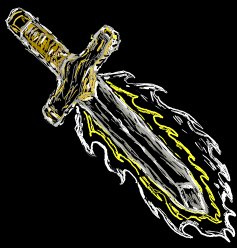 There is a kind of double meaning in the idea of something being devoted to God: it may entail either punishment or acceptance, judgment or justification. While cities were sent up in smoke as a mark of God’s judgment, the system of offerings shows a positive meaning of ascension in smoke. The penalty and judgment for sin came into play when the animal was put to death. After its death, the animal’s ascension in smoke was a positive figure of its entering into God’s presence on behalf of the worshipper. The underlying Hebrew for “whole burnt offering,” in fact, literally means “ascension offering.” Likewise, Jesus, our offering for sin, in his ascension brings us to the Father in union with him as our representative. So, today, the church wields the sword of the Spirit, the word (Eph. 6:17; Heb. 4:12), waging a campaign of devoting the world to God by spreading the fire of the Holy Spirit, life born out of repentance. Since Pentecost, we are living sacrifices.
What struck me in thinking about this was Israel’s refusal to enter into Canaan, and how this may serve as a caution for the church. Consider Numbers 13:25-14:38. Clearly God promised to give them the land, and they saw firsthand his power to fight for them. And yet they still did not believe. Ultimately, God forgave their sin, but they had to endure the consequence of their unbelief through forty years of wandering and death. In a way, they were given only as much as they believed God for: they did not believe God could or would fight for them, so they do not enjoy the victory that God had promised.
What does this mean for the church? Jesus is the high priest whose death brings about an atoning transition from judgment to grace (Numbers 20, 35), and immediately opens the way to the gospel’s conquest of the world (Numbers 20:29-21:3). Jesus’s ascension is his coronation; the Father has now put everything in subjection under his feet (Ps. 8, Heb. 2). Here are a few ways we can work at walking in faith in Jesus’s lordship:
- Jesus is lord of nations, kings and magistrates, so our responsibility as citizens does not stop at voting and prayer: we call them to account to Jesus and seek to disciple them
- Our children belong to Jesus and his Spirit is at work in them, so our parenting owes as much to the pattern of discipleship as to evangelism
- Jesus is lord of our work, so we can work in any lawful vocation “as for the Lord,” knowing that he is beginning a new work of subduing the earth regardless of the seeming futility we see on our own time horizons
- Jesus is lord of all, so we can confidently appeal to unbelievers on the basis that they live under his rule in his realm, that everything they enjoy is a blessing from him, and that true joy and blessing is to be found in welcoming him and his lordship rather than despising him.
And belt out some Christmas songs this holiday season. Joy to the world!
Little faith
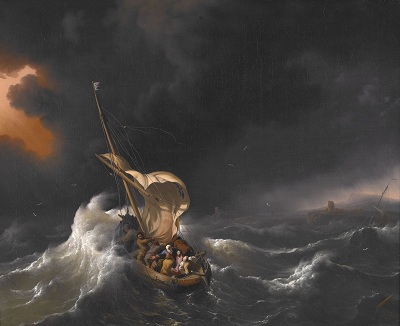 I’m thinking about Mark 4:40, the storm and the miracle, and Jesus’s question, “Have you still no faith?”
The disciples ask if Jesus cares for them, and later marvel at his authority. So it seems they were lacking in faith both in Jesus’s power and compassion. I wonder if Jesus’s question is meant to apply more to one or the other. Certainly we can be encouraged by this passage to trust in both Jesus’s power and his care for us: we should run to him, confidently, in every circumstance.
I also wonder if there is a specific theological reason this story is at this point in the text. James Jordan points out that in Biblical symbolism, the sea regularly represents the Gentiles. Plugging that into the progression of Mark 4:
- The word is going out, and people (and peoples?) will respond to it in different ways (vv. 1-20)
- The word is going to be displayed, and the disciples must take part in that (vv. 21-25)
- It is going to be scattered (to the Gentiles) and will produce fruit (vv. 26-29)
- It will produce great fruit (among the Gentiles) (vv. 30-34)
- Have you still no faith, reader, disciple? Even the Spirit and the raging Gentiles obey him (vv. 35-41).
Then in Mark 5, Jesus heals a demoniac and sends him to minister to Gentiles. To a Jewish woman experiencing ceremonial death, he gives healing. To a Gentile daughter experiencing physical death, he gives life. Seeds are being planted and are sprouting.
Something old, something new
Acts 2 shows us the inauguration of the new covenant. Jesus has died, was resurrected, and ascended as the victorious anointed king. He pours out his spirit on his people more fully, in a visible way that calls our attention to earlier covenants where God’s fire came upon the altar. He begins to establish his church, and in one sense we can call this the very beginning of the church.
But not in every sense. There is something old here as well as something new.
Acts 2 is not the first time the word for church has appeared. The Greek word ekklesia appears in Matthew 16 and 18. These are not proleptic references to something the disciples could not have anticipated. Rather, they reflect a kind of continuity between the assembly or congregation of the Old Testament and the church. In fact, the Septuagint uses ekklesia throughout to refer to the assembly of God’s people. The first time it appears is in Leviticus 8:3, for the gathering of God’s people at the establishment of a new (Mosaic) covenant. We say that, typologically, the church is Israel. It is, but we can say more: Israel was the church.
The idea of God’s forming a bride out of his people is not new, either. The imagery in Exodus suggests that God was espousing himself to his people, and this is later taken up by the prophets. We know that marriage itself was designed to reflect the deeper and more enduring reality of Jesus and his church (Eph. 5), so this is an inescapable subtext in the Song of Solomon, whatever you may think about the primary meaning of the book. Interestingly, the Hebrew word for food offering is related to the word for woman, wife, bride. This goes both ways — woman is the glorious fire to man’s dust, but there is also bridal imagery to the offerings consumed by God.
To reconcile these somethings old and new, we can recall that there was something “not good” about the church and covenant, so that it had to be remade, restructured, put to death and raised back to life. In this way the church is something old and it is made something new. This is true of all of God’s new covenants — sin and death require God’s people and the old creation to pass through a kind of death and resurrection into a new creation, a new heavens and earth. This is particularly clear in God’s dealings with Noah, but also in the Exodus, where there are literary and typological features that point to God’s making a new creation. This reaches its complete fulfillment in Jesus in the new covenant. He passes through death to resurrection, and so must the old creation in order to enjoy life. Just as Adam had to pass through a kind of death for Eve to be born from his side, so Jesus had to pass through death itself in order for a more glorified church to be reborn through the blood and water from his side. The least of those in this new creation is greater than the old creation’s greatest prophet (Matt. 11:11).
In a way, the assembly needed a kind of baptism. It had to die and be reborn to become the church. Specifically, it had to die the death of repentance. There was no more possibility of life with the status quo: synagogues had to give their allegiance to Jesus if they were to remain in the tree. We see some synagogues undergoing this repentance and resurrection in Acts, so that it is even possible that Romans 11:26 was fulfilled by the fifth century.
The church has always been Jesus’s body and bride, given a portion of the spirit, given gifts of life and fellowship, and called to sacrifice for life of the world. What is new in Acts 2 is this: Jesus has come in the flesh; everything that was only anticipated in the old covenants has been accomplished; Satan has been cast out of heaven and a man sits enthroned there; Jesus has given the keys to his kingdom from cherubim to his church; he has poured out his spirit more potently, widely and enduringly than ever before; and Jesus has not only drawn his people nearer to him, but now invites all nations to enjoy the privileges and responsibilities of this special nearness.
Something new from something dead,
Something plundered, something red.
Thorn
 Some things James Jordan has said about thorns and about Jacob make me wonder if we can glean additional insight into Paul’s enigmatic statement that “a thorn was given me in the flesh, a messenger of Satan to harass me, to keep me from becoming conceited.”
First, Jacob wrestles with God, a type of prayer, bracketed by two other prayers. He prays for deliverance from his wrestling opponent, Esau; Paul prays three times for deliverance from his thorn. Second, at the time of his wrestling, Jacob has had two Christophanies, one of which is the occasion of his wound. Paul has had two Christophanies (his conversion and 2 Cor 12), the second of which is identified with his thorn. Finally, Jacob’s limp is directly connected with and signifies the blessing he receives from God; Paul’s thorn is directly connected with and signifies a blessing from God, specifically the power and strength of Christ.
So is Paul’s thorn analogous to Jacob’s wrestling, or to his limp?
If the wrestling, Paul’s thorn is a messenger (angelos), just as Jacob’s wrestling partner was the angel of Yahweh. Paul compares it to harassment, insults, persecutions. At the very time Paul mentions his thorn, he is wrestling with “super-apostles” in Corinth, just as Jacob had wrestled with Esau, Isaac and Laban. And Jordan has insightfully observed that Scripture’s constant analogy between men and plants, men and trees, gives the thorny curse of Genesis 3 a double meaning: Adam must wrestle with both thorns of the field and thorns of the flesh. Cain is the first such thorn; I wonder if we are, figuratively, the thorns Jesus bears on his crown. So perhaps Paul’s thorn is his opponents, false teachers, Judaizers.
But if Paul’s thorn is analogous to Jacob’s limp, and this seems to fit better, then it is a “foot” wound like Jacob’s, like the Messianic foot wound that Jesus shares with his people. Paul compares his thorn to weaknesses, hardships, calamities. Paul’s calling his wound a thorn establishes an interesting link between Adam’s curse and the serpent’s curse. We wrestle with thorns of all kinds in order to bear fruit, but it is in our very wrestling that we (Adam, Jacob, Israel, Jesus, Paul, Christians) receive a bruised heel. And Satan is not simply crushed, but it is precisely in Jesus’s and our wrestling with these thorns that Jesus wins victory and his kingdom is established. The curse, the way of decay and death and sacrifice, is the path to its own undoing.
In either case, Paul is a new Jacob. Both men have a name change. Both men experience fourteen years without apparent fruitfulness, but which God uses to prepare them for fruitfulness and dominion. Both men wrestle, although Paul’s wrestling does not seem to come to an end. Both are given a “foot” wound that is a sign of God’s blessing and power. And because their “bodily presence is weak,” they must both lead God’s flock with words and wisdom rather than strength.
Quench
 Some more thoughts on the unpardonable sin in Matthew 12.
First, the Holy Spirit can variously be seen as the personified love of God, the life of God, as life-giving water and breath and fire. The Spirit proceeds between the Father and Son, from the Father and Son to Christians, and from Christian to Christian. All of the gifts and fruits of the Spirit have a one-another focus to them: the Spirit is the unity-giving glue between Christians that ties the church together and strengthens our life.
So, in a sense, to blaspheme the Spirit, to quench the Spirit, is to cut yourself off from the waters of life and from the body of Christ.
Second, there is a corporate reading of this passage that complements the individual reading. Jesus is speaking here to the shepherds of Israel. Later in this chapter Jesus establishes a direct parallel between his miracle of deliverance and the nation of Israel: Jesus would set Israel free, but the demon will return, find the house empty of the Holy Spirit, and fill the house with more evil spirits. “So also will it be with this evil generation.” This is not unusual; many of Jesus’s parables are warnings spoken to Israel and her leaders as a nation, assembly, church.
Reading the passage in this light, blasphemy against the Spirit is the rejection of the Spirit by God’s people. Jesus is warning Israel that the Spirit will depart from them, a direct fulfillment of the Spirit’s leaving the temple in Ezekiel’s vision. The unpardonable sin is thus not only a warning to individuals, but also a warning to churches: if you reject the Spirit, the Spirit will depart from you.
 I gotta have my orange juice.