First day
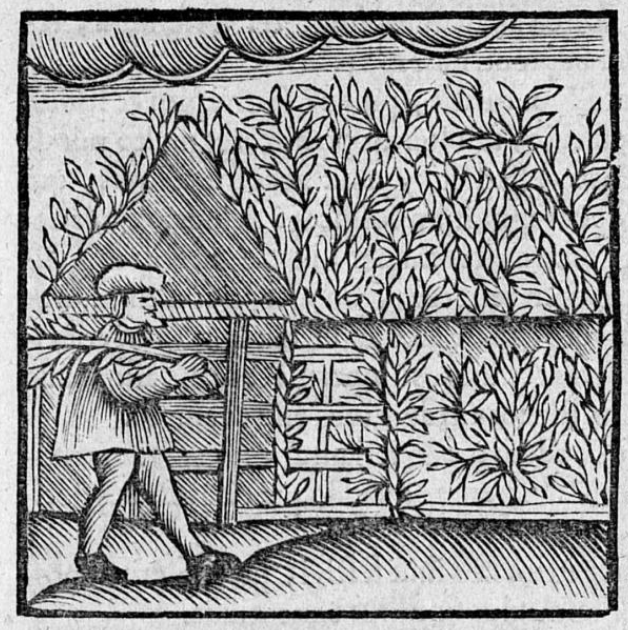
It is widely recognized that the Feast of Booths–Ingathering carries an eschatological symbolic weight. Unlike Passover, which was limited to circumcised Israelites, Booths is a feast in which the uncircumcised God-fearer was included (Deuteronomy 16:14). This anticipates the harvest of the nations into God’s house. The church’s celebration of the Lord’s Supper therefore stands in the line of Booths just as much as it stands in the line of Passover.
If you think of Booths as a type or prolepsis of the church age, it is quite interesting to observe that Booths also interrupts the weekly Sabbath calendar and temporarily introduces a new Sabbath calendar, obliquely tied to the festival time and not the old weekly cycle:
Then Yahweh spoke to Moses, saying, “Speak to the children of Israel, saying: ‘The fifteenth day of this seventh month shall be the Feast of Tabernacles for seven days to Yahweh. On the first day there shall be a holy convocation. You shall do no customary work on it. For seven days you shall offer an offering made by fire to the Yahweh. On the eighth day you shall have a holy convocation, and you shall offer an offering made by fire to the Yahweh. It is a sacred assembly, and you shall do no customary work on it. . . .
‘Also on the fifteenth day of the seventh month, when you have gathered in the fruit of the land, you shall keep the feast of the Yahweh for seven days; on the first day there shall be a sabbath, and on the eighth day a sabbath. (Leviticus 23:33-39)
In this new time, this church-time, the first and eighth days are the days of rest.
Now on the first day of the week, when the disciples came together to break bread . . . (Acts 20:7)
 I gotta have my orange juice.
Picture source: https://commons.wikimedia.org/wiki/File:Sukkot_woodcut.png
Scott Moonen
August 15, 2025 at 4:03 pm