AD 30
Andreas Köstenberger argues that AD 33 is the date of the crucifixion. James Jordan argues instead for AD 30 based on Herod’s death in AD 44 (Acts 12) and Paul’s fourteen years (Gal 2; Acts 11–12). It seems difficult to adjust Jordan; is there potential to adjust Köstenberger?
Köstenberger connects the fifteenth year of Tiberius’s reign (Luke 3) with the three Passovers Jesus attends (John 2, 6, 11). He holds that the first Passover could have been no earlier than AD 29, making the crucifixion no earlier than AD 31. But I think Köstenberger is wrong to say that the fifteenth year requires that Luke 3 must be no earlier than August of AD 28. We see a counterexample in the resurrection itself: Jesus rises the third day at dawn: Friday afternoon, Saturday, Sunday morning.
Thus, if we allow for this possibility, Tiberius’s fifteenth year begins as early as the winter of AD 28 rather than August. That makes it possible for the first passover to be in AD 28, and this is consistent with Jordan’s chronology. Köstenberger actually allows for this kind of flexibility in language in how he reckons the possible end of the fifteenth year; but not for its beginning:
The earliest possible date at which Tiberius’s “fifteenth year” began is August 19, a.d. 28, and the latest possible date at which his “fifteenth year” ended is December 31, a.d. 29.
Taken together, Jordan shows that the crucifixion could have been no later than AD 30, while this adjustment to Köstenberger’s argument shows that it could have been no earlier than AD 30.
Beowulf
Tolkien’s translation is okay:
Then that warrior turned his horse, and thereupon spake these words: ‘Time it is for me to go. May the Almighty Father in his grace keep you safe upon your quests! To the sea will I go, against unfriendly hosts my watch to keep.’ (22)
Heaney is better:
. . . then the noble warrior
wheeled on his horse and spoke these words:
“It is time for me to go. May the Almighty
Father keep you and in His kindness
watch over your exploits. I’m away to the sea,
back on alert against enemy raiders.” (23)
But Wilson’s rendition is the best (it must be read aloud):
Then he wheeled and he went, wished them Godspeed,
“May the great Father favor you and find you in kindness,
Bestowing His blessings and backing your exploits.
For myself I must go and make my way back
To the coast where I can keep my watch up for raiders.” (17)
Cross country coaching notes
Endurance training descending priorities
- Training volume: get in a lot of hours and miles each week
Beginning runners should devote at least three days to running, and experienced runners should devote five or six days to running. - Incorporate high intensity training
A portion of your training should involve high intensity work, which should take you into a high heart rate zone and leave you out of breath. You should incorporate both short, explosive intervals as well as longer intervals (e.g., 4 minutes, 1 mile) into your work.- 8min/zone4 intervals seems like a sweet spot but all HIIT is beneficial
- In a 5k you are still ~12% anaerobic; be sure to incorporate very short intervals and plyometric exercises as well, while allowing for longer recovery for intense anaerobic work
- Training at each zone boundary gives your body practice with different forms of energy production and helps to raise each boundary
- Recovery far outweighs HIIT; 80/20 seems like a sweet spot, but there is benefit even in a 60/20/20 model.
Surprisingly, your body’s greatest adaptation to training takes place during its “recovery” phase. You must spend 60–80% of your running time at lower intensity. If you over–train at high intensity you are stealing from rather than building up the running capacity you want to develop by the end of the season. - Seek a balance of variety
This includes many things such as exercises and cross training; stretching, flexibility, and coordination; running races vs. practices; varying your running workouts and terrains; varying your training plan over the course of the season; tapering before races; etc. Although these are less important than the earlier items on the list, they are still helpful and can also add to your running enjoyment.- This includes different kinds of long and short scale periodization; exercises and cross training; stretching, flexibility, and coordination; terrain; climate; elevation; running races; etc.
- Over the course of a season there should be a graduated movement of focus from acceleration to speed and then to speed-endurance
- Targeted stretches will vary widely from person to person. Focus broadly on dynamic stretching and emphasize this primarily as part of pre-workout warmup. Stabilization work (balance and range of motion) can be helpful for many younger runners.
- Tapering; toward end of season drop volume and increase intensity
Running form
- High cadence (160+) is more efficient for your body but also solves many common problems with running form
- Shorter, lighter impulses are more efficient
- Arm and corresponding leg drive opposite one another
- Do not overstride; land foot underneath or just in front of you. Overstriding increases braking, makes each stride more intense, and divides your effort between push and pull.
- Foot strike relatively flat; do not worry about difference between heel vs. toe strike
- Draw knee relatively high on return; this reduces effort of angular motion
- Upright torso, even on hills
- Run relaxed; monitor tension especially in your face and shoulders as this is a sign you are running tight
- Belly breathing vs. chest breathing; side aches can indicate poor breathing
Nutrition, etc.
It’s possible to get very meticulous here, but most runners are best helped by simply being well rounded. Food journaling may be worthwhile for ambitious students.
- Are you getting a reasonable balance of carbs, fats, proteins? Carbs should be significant.
- Are you getting a reasonable balance of these not only each day but each meal as much as possible?
- Are you getting much of your carbs from fruits and vegetables and not just grains?
- Adequate sleep is important; 8-10h
- Hydration is important, especially in hot weather. Hydration the day before the race is especially important and is commonly neglected.
Kids may be tempted to mainly to undervalue fruits and vegetables. Adults today are likely to undervalue carbs.
Race day
- Your meal should be at least 3-4 hours prior
- Eat things easy for you to digest: primarily carbohydrates, some proteins, few fats
- Spaghetti, rice, yogurt, chicken all good options
- Adequate warm-up
- 10min for youngest ranging to 30min for older students
- “Go full speed before you go full speed” to recruit your muscles
- Are shoes double knotted? If your shoe cannot hold a double knot, the “Ian Knot” or the “Two Loop Knot” (same knot, different technique) hold much more strongly.
- If there is an early turn in the course, start on the opposite side so that you aren’t boxed in
- Don’t always follow the crowd: follow the course. Run the shortest distance possible.
- Be cool and stay relaxed, while keeping your eyes wide and alert.
- Don’t lead unless you know you are going to win. You become a target.
- Run your race, not someone else’s.
- Your arms are your engine. Keep them active but under control.
- Remember your hill routine: eyes up, shoulders down, use your arms
- Pace hills; don’t kill them. Run up a hill on your toes and downhill on your heels.
- When you start to feel depleted, think of a recent workout that you conquered and how good it felt when you finished it
- Run race in a pack, but don’t get stuck in middle of pack. Move up, then move between packs decisively.
- Take setbacks in stride. Get up after a fall.
- Instill attitude “no one on the team gets passed over the final 100 meters”
- Rehearse courses beforehand if possible
- Watch the finish line and not other runners
- No need to overdo pre–race speech
- Adequate cool-down (10-15min)
- Post–race talk important; be encouraging, give praise. Involve team captains in this.
Coaching
- Engagement includes both parents and students
- Cross country is a team sport and a team should use this to their advantage
- Variety is helpful physiologically but also for runner engagement
- Encourage goal-setting and work on incremental improvements
- Teach resiliency in the face of setbacks; coach yourself, watch your self-talk. “I can do this.”
- Watch out for overtraining, make adequate time for recovery
- Some especially important kinds of training and skills include hill workouts, starting, passing
- Beginners should train 3 days / week, older and more advanced runners 5 or more days including cross training
- If you’ve come from a track background, we are going to do some longer interval and recovery work to develop your cross country chops
- Your balance between slow and fast twitch is largely fixed at birth; you are born for endurance or sprinting. But you can improve your performance at both!
- Hot and humid weather is dangerous
Sources
- Coaching Cross Country Successfully
- Track & Field Coaching Essentials
- Coaching Youth Track & Field
- Seiler’s Hierarchy of Endurance Training Needs and That Triathlon Show podcast review
- James Dunne on running form
Metal men
The metal of God’s tabernacle symbolizes his people. Perhaps the clearest implication of this is that Nebuchadnezzar first takes gold from the temple together with the leaders of the land (2 Kings 24), and later takes remaining gold, silver, and a multitude of bronze together with the remaining people of the land (2 Kings 25). There is an analogy between the implements of God’s physical house and the people who form and serve in God’s spiritual house.
I know that Tarshish is not necessarily Tarsus. But there is still a linguistic connection between the two, and I think we can glimpse another example of this precious metal analogy in the person of Paul. Solomon supplies his house and God’s house with gold and silver from Tarshish:
All King Solomon’s drinking vessels were gold, and all the vessels of the House of the Forest of Lebanon were pure gold. Not one was silver, for this was accounted as nothing in the days of Solomon. For the king’s ships went to Tarshish with the servants of Hiram. Once every three years the merchant ships came, bringing gold, silver, ivory, apes, and monkeys. (2 Chronicles 9:20-21)
God brings into his kingdom another gift-treasure from Tarshish/Tarsus:
So the Lord said to him, “Arise and go to the street called Straight, and inquire at the house of Judas for one called Saul of Tarsus, for behold, he is praying. And in a vision he has seen a man named Ananias coming in and putting his hand on him, so that he might receive his sight.” (Acts 9:11-12)
Saul/Paul is gold and silver brought into God’s house.
This reminds me of the great reversal between Psalm 68 and Ephesians 4. While Psalm 68 says that God receives gifts:
You have ascended on high,
You have led captivity captive;
You have received gifts among men,
Even from the rebellious,
That the LORD God might dwell there. (Psalm 68:18)
Paul reverses this in Ephesians:
Therefore He says:
“When He ascended on high,
He led captivity captive,
And gave gifts to men.” (Ephesians 4:8)
This is not because Paul is simply perpetuating Septuagint corruptions. Instead, I maintain that Paul is here applying his understanding of the union between Jesus and his church. Paul understood this union from the very moment of his conversion, when Jesus identified himself with his church:
Then he fell to the ground, and heard a voice saying to him, “Saul, Saul, why are you persecuting Me?” (Acts 9:4)
What is happening in Ephesians is that Jesus is receiving gifts from the nations—gifts such as Paul himself. In the very act of receiving these gifts he also sets them free and gives them to his own body, his church.
Metábasis eis állo génos (4-1)
Malapropism of the day: clock pot.
The only sane program of national defense begins with right worship:
For the nation and kingdom which will not serve you shall perish,
And those nations shall be utterly ruined. (Isaiah 60:12)
The last enemy that will be destroyed is death. As a down payment against this sure promise, the first place to be inhabited by the first body to die no more was a tomb.
What does the Westminster catechism say is the chief end of man—“To glorify God and to be brokenhearted before him forever”? (Brad Hodges)
Then a man came from Baal Shalisha, and brought the man of God bread of the firstfruits, twenty loaves of barley bread, and newly ripened grain in his knapsack. And he said, “Give it to the people, that they may eat.”
But his servant said, “What? Shall I set this before one hundred men?”
He said again, “Give it to the people, that they may eat; for thus says the LORD: ‘They shall eat and have some left over.’ ” So he set it before them; and they ate and had some left over, according to the word of the LORD. (2 Kings 4:42-44)
Jesus, who fed such bread to thousands, and now feeds billions each week, is the head of the new school of prophets, which is his church. Like Elisha, his pastors have the firstborn’s double portion of his spirit with which to feed his people.
The inauguration of the Lord’s Supper was not the last Passover: that came 40 years later. Jesus, the latter Jehu (2 Kings 10), gathered the idolaters together for a great sacrifice, made doubly sure that his people were not among them, surrounded them, and destroyed them.
God scourges a people when he sets them under childless pagan women like Jezebel and Athaliah. But he also brings about restoration by means of his church, as with Elisha and Jehoiada.
Philip K. Dick wrote this provocative short story on abortion: The Pre-Persons.
Psalm 91 is worth reading in detail, but what makes it so important is that it is not a prayer for protection, it is an outright statement the believer will be guarded against all sorts of harm. No ifs or buts. This is what God shall do. (Philip Jenkins)
The Beginnings
By Robert Louis Stevenson. Hat tip: Steven Wolfe
It was not part of their blood,
It came to them very late
With long arrears to make good,
When the English began to hate.They were not easily moved,
They were icy willing to wait
Till every count should be proved,
Ere the English began to hate.Their voices were even and low,
Their eyes were level and straight.
There was neither sign nor show,
When the English began to hate.It was not preached to the crowd,
It was not taught by the State.
No man spoke it aloud,
When the English began to hate.It was not suddenly bred,
It will not swiftly abate,
Through the chill years ahead,
When Time shall count from the date
That the English began to hate.
Metábasis eis állo génos (3-25)
The future turns into the past. But also the past turns into the future.
The word ekklesia appears in the gospels. Fortunately Jesus spends a great deal of time defining this surprising new word for his puzzled disciples. This is how we learn that the church is a new kind of noncorporeal body (TM), whose primary nature is invisible rather than visible, and which excludes children from membership. The word covenant isn’t entirely new to the disciples, however. Jeremiah first introduces us to it: “This is the covenant that I will make with some of the house of Israel after those days, says the Lord: I will put my grace in some of their minds, and write it on some of their hearts; and I will be the God of some of them, and some of them shall be my people. . . Some of them shall know me, from the middlest of them to the greatest of them.”
Joseph understands Girard and Friedman. Families and churches must guard against quarrels even during the best of times:
So he sent his brothers away, and they departed; and he said to them, “See that you do not become troubled along the way.” (Genesis 45:24, NKJV)
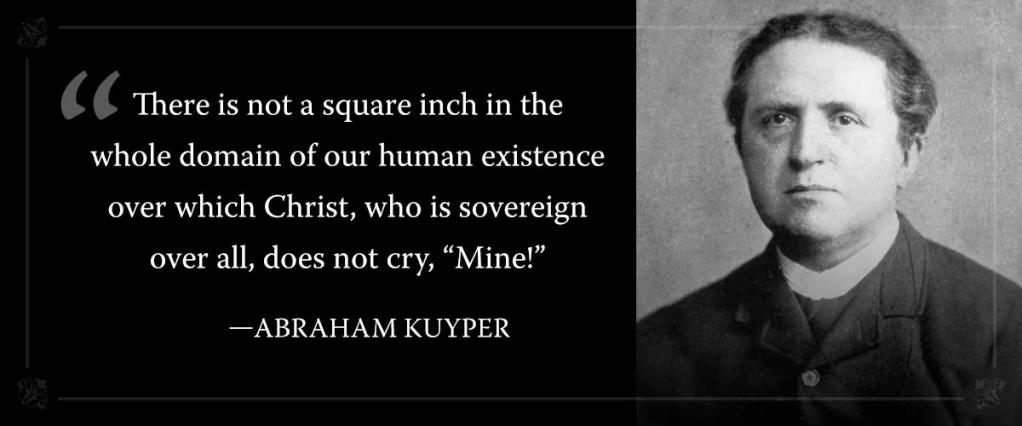
Kuyper’s got it all: Christian individuals, Christian families, Christian businesses, Christian art and music, Christian localism, Christian nationalism, even Christian cosmos. So: baptize your babies, sing Psalms against tyrants, and raise a glass to the king of kings!
Everyone who is clean in your house may eat it. (Numbers 18, NKJV)
For the unbelieving husband is sanctified by the wife, and the unbelieving wife is sanctified by the husband; otherwise your children would be unclean, but now they are holy. (1 Corinthians 7:14, NKJV)
Thus, paedocommunion! Thanks to Michael Burdge for this connection.
Metábasis eis állo génos (3-24)
A husband is a care-taker. I’ve always thought of this in the sense of exercising care. But there’s also a sense of receiving and relieving care.
“We are not hoping to be saved from the physical world, but for the good of it.”—Duane Garner
Thanks to MHAJ 155 for reminding me of this quote:
The modern world is not evil; in some ways the modern world is far too good. It is full of wild and wasted virtues. When a religious scheme is shattered (as Christianity was shattered at the Reformation), it is not merely the vices that are let loose. The vices are, indeed, let loose, and they wander and do damage. But the virtues are let loose also; and the virtues wander more wildly, and the virtues do more terrible damage. The modern world is full of the old Christian virtues gone mad. The virtues have gone mad because they have been isolated from each other and are wandering alone. Thus some scientists care for truth; and their truth is pitiless. Thus some humanitarians only care for pity; and their pity (I am sorry to say) is often untruthful. For example, Mr. Blatchford attacks Christianity because he is mad on one Christian virtue: the merely mystical and almost irrational virtue of charity. He has a strange idea that he will make it easier to forgive sins by saying that there are no sins to forgive. Mr. Blatchford is not only an early Christian, he is the only early Christian who ought really to have been eaten by lions. For in his case the pagan accusation is really true: his mercy would mean mere anarchy. He really is the enemy of the human race — because he is so human. (G.K. Chesterton, Orthodoxy, ch.3)
Or: every man an integrated man. I think we can own that in order to be complete, every revolution, even the Reformation, needs to be harmonized with the good of what came before.
Metábasis eis állo génos (3-23)
I’m still reflecting on ERH’s history of revolution. He summarizes past revolutions as establishing that every man is a priest, king, aristocrat, merchant. He sees this as an integrating sequence but it is at least as much a repudiating sequence: “there are no priests; there are no kings.” Perhaps the next stage is an integrating stage: every man a man.
“Grape juice is dead wine”—Duane Garner
If meekness is strength under control, perhaps modesty is beauty—or, pace Duane, glory—under control.
QE2 was likely the most prayed for person in history.
I was looking recently at coffee makers. I was disappointed to discover the existence of Keurig travel bags and mixed drink pod machines. But I was also fascinated to see this:
I could get behind this definition:
Metábasis eis állo génos (3-22)
The Lord’s prayer has a formative effect on us. The more we pray it, the more we understand ourselves to be:
- Sons and daughters of the Father
- Members of and participants in a glorious and unshakeable heavenly-earthly kingdom
- Those who need not be anxious because we have adequate provision
- Those who are forgiven
- The kind of people who readily forgive
- Those who are protected from and strengthened against temptation and attack
Performing the Psalms is a lot like stepping through the wardrobe into Narnia. Before too long—you spend your childhood doing that—you’re unable to live in the normal world the same way ever again. Why? Because you’ve actually inhabited a larger, grander, more glorious world; a world that’s even more real; a world that transcends everything you thought you knew. You have discovered by participation that there’s more to reality than meets the eye. (Trevor Laurence, Singing the Future)
I’m having great difficulty processing Eugen Rosenstock–Huessy’s Out of Revolution. He recognizes both a demonic but also a God–ordained character to revolutions, so that it is difficult to make a single value judgment or a clear prediction of what may happen. Of course, that is just how complex and multi-layered God’s world is. Here is one startling passage:
The great Revolutions break out whenever the power which has governed heaven and earth dries up at the fountain-head. The great Revolutions seem to destroy an existing order; but that is not true. They do not break out until the old state of affairs is already ended, until the old order of things has died and is no longer believed in by its own beneficiaries. (471)
By this token, what we are seeing right now is not a revolution but the last spasms of the Bolshevik revolution. It has run its course and is gasping its last breath. That is encouraging, though what comes next is not clear. ERH believes that a global economic revolution comes next, but to be fair, he writes this in 1938 and this may have already passed and run its course.
Wilson has recommended Zeihan lately, and while I have not read him, Wilson’s representation of Zeihan’s primary thesis seems like an interesting way to understand how the world might revert to a more tribal or at least nationalistic situation. It is interesting to contemplate a world in which the international exchange of information is cheap but the exchange of goods is costly.
Antonyms: wreck, rectify
Spelling correction of the week: virtually => ritually
From our VRBO lake rental:

Ralph Vaughan Williams’ composition for the coronation of QE2:
 I gotta have my orange juice.