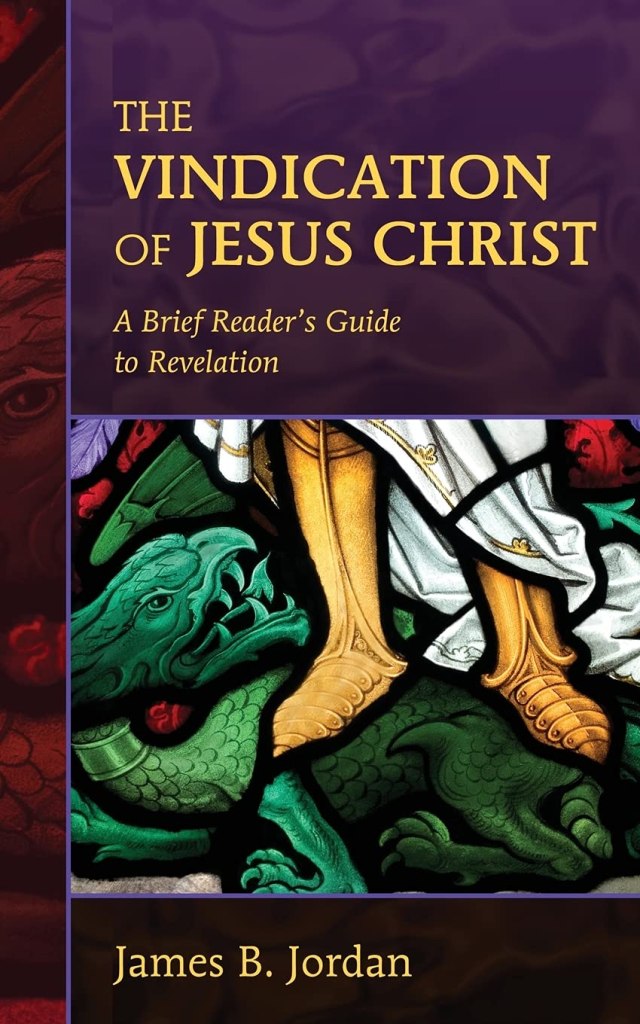
Jeroboam famously reinstitutes golden calf worship (1 Kings 12) and names his sons after the sons of Aaron who had offered strange fire (1 Kings 14; Abijah and Nadab). James Jordan hypothesizes that Jeroboam was cleverly inventing a pretext to draw Israel away from worshipping in Jerusalem:
Now, what’s Jeroboam doing? He is returning back to the situation before Moses and Aaron set up the Levites, isn’t he? He says, “No more tabernacle, we’re going to go back to the golden calf. No more Levites, we’re going to go back to the nobility of Israel and make them priests.” What’s he saying? He’s saying basically the kind of thing that Mormons and Jehovah’s Witnesses say today when they say, “We don’t want this Trinitarian Christianity that was invented in the 4th century at the Council of Chalcedon in Nicaea. We want to go back to the early church before this doctrine of the Trinity was invented because the early church was not Trinitarian.” Of course, that’s wrong, but that’s their myth.
Now, that’s the same kind of thing Jeroboam is doing, I believe. He’s saying, “We want to go back before Moses and Aaron took charge and made themselves dictators and set up this tabernacle stuff and took the priesthood away from the people and gave it to the Levites. And we’re going to go back.” And he says, “Look, you’ve probably heard that Nadab and Abihu, the sons of Aaron, were killed by God, but they weren’t. Remember Leviticus says that Nadab and Abihu offered strange fire, and fire came out from God and burned them up. Remember that story?” Now Jeroboam is trying to tell the people, “Well, that’s what your Bible says, but that was written by them Levite priests, and the real historical facts are probably that Moses and Aaron killed them because they wanted to perpetuate the good old true religion of the golden calf.” And so Jeroboam names his sons Nadab and Abihu.
Now what I just said about his theology is something of a guess, but there’s no doubt that he named his sons Nadab and Abihu, and I can’t figure out any other reason why he would. If you look in chapter 14, verse 1, it says, “At that time, Abijah, the son of Jeroboam, became sick.” Now, Abijah is the same as the word Abihu. It’s just a different spelling of the same name. And if you look in verse 20, you’ll find, “And the time that Jeroboam reigned was twenty-two years, and he slept with his fathers, and Nadab his son reigned in his place.” So he names his sons Nadab and Abihu, after the two sons of Aaron that were burned up for blasphemy.
So I think Jeroboam took counsel with people and invented a theology and decided he would go back to supposedly what the true worship had been before it was corrupted by Moses and Aaron. He takes the side of Korah, Dathan, and Abiram who say all the people are holy, not just the Levites. That’s the kind of thing he’s doing. Now, of course, it’s politically expedient to do this. When he rejects the Levites from being priests, it says he appointed other people to be priests. Who do you suppose became the priests? Well, probably not necessarily the firstborn. Let’s say that you were Jeroboam and you were trying to consolidate power. Who would you make as priests? Yeah, your friends, members of the nobility. Because you want to tie them into you, you see. You want to make them vassals, make them indebted to you. You want to centralize authority. Up in this time, you have church and state separate. Levites are over here with their own government. Nobody can be a priest except a Levite, which means they are free from political control. But when you get the golden calf situation, then the Levites and the church officers are all appointed by the king, by the state. And you have one government, centralized authority, centralized control.
One other thing we see here is this feast in the eighth month. It says, like the feast that’s in Judah. What’s the feast that it’s talking about in Judah? Was there a feast in the eighth month in Judah? No. What’s the nearest feast? The feast in the seventh month. Now, what was the feast in the seventh month? It’s the biggie. The biggest of all the feasts. Tabernacles. Tabernacles. That’s where everybody comes and builds a little booth made of palm branches and other branches and lives in Jerusalem and celebrates a festival. And the Feast of Tabernacles became—there’s evidence that indicates this, although it’s never explicitly said—it became a feast that celebrated the kingship of the Lord in Israel. At any rate, Jeroboam puts up a feast that’s just like that, a big eight-day feast, but he does it in the eighth month.
Now, why do you suppose he would do it in the eighth month instead of the seventh? Remember, we’ve got to think like shrewd politicians here. In the first place, you want to have a feast so that your people have an alternative and they’re not attracted to go to Jerusalem. Yeah, you don’t want them to have to choose. And do you want your feast before or after? After. That’s right, so the people come home from Jerusalem and then there’s another feast and what’s left in their mind is the second feast, your feast, the feast of the eighth month.
So that’s all the shrewd kinds of things he’s doing here. He’s counterfeiting the feast of tabernacles, counterfeiting the tabernacle as we’ll see, counterfeiting the cherubim, setting up false gods.
One other thing he does, once the temple was set up, were the people supposed to worship on high places anymore? No, there was only supposed to be one place for festival worship. Now, they had synagogue worship everywhere, in all the towns and cities and everywhere, on Sabbath days and new moons and other occasions. But as far as the festival worship or sacrifices took place, that was only supposed to be one place. Now, Jeroboam, he sets up many places because that’s what the people really wanted. They’d gotten used to having a lot of high places during the hundred years between the tearing down of the tabernacle and the building of the temple. And so he just plays up to them by saying, “Yeah, well, we can. I mean, God is omnipresent, isn’t he? We can worship him anywhere. This is nothing but a priestly innovation made up by Levites that we can only have one place. It’s part of Solomon’s attempt to centralize the nation to have a temple here. Don’t believe them when they tell you that God told them to do this stuff. They just say that. No, in reality, they set up this one temple in order to centralize all the power in themselves.” That’s the way he argued, and of course, he found a lot of people who wanted to believe that. So he sets up two sanctuaries, one in Bethlehem and one in Dan.
Jordan’s take seems compelling to me. What I find especially interesting is that he has Jeroboam resurrecting an old false religion, a sort of zombie religion. This provokes a few thoughts. First, this zombie religion is a new creation, an eclectic smorgasbord rather then a genuine return to an older way. It is an amalgam of high-place worship and firstborn-son priesthood with golden-calf worship and strange fire, as well as a variety of innovations. Second, this zombie religion is brought to life by coming into contact with true worship. If Jeroboam had not needed to draw people away from and to undermine the worship of the living God, he would not have had to invent a false religion. Satan is lazy; he only goes to work when he is at risk of losing ground. Third, this has direct applicability to modern false religions. In reality, they are boutique religions; none of them are old, because none of them have inherent life to perpetuate themselves. The more Christianity spreads, the more false religions draw life from an adversarial and parasitic relationship to Christianity. They must reconstitute themselves every few generations, partly because God judicially tears them down, and partly as a reactive response to the growth and maturation of Christianity. Girard observed, for example, that the more society’s scapegoating mechanisms are exposed, the more society repositions itself as a victim, creating a subtle new form of scapegoating.
Finally, there is no such thing as rewinding the clock, going back. Jeroboam’s false religion does not erase Israel’s obligation to serve the true and living God. The time of the divided kingdom, I think, serves as a prototype for the relation between the nations and the church; you must go up to the new Jerusalem to worship. Decades later, God chastises wicked Ahab for not conducting holy warfare (1 Kings 20:42)! Centuries later, God’s prophets are still dealing with the kings of Israel. And these later prophets often chastise other nations that have also been exposed to faithful worship.
In fact, you never hear of anything like God-fearers anymore after, I guess, maybe the Zoroastrians—who have continued since that time—might be a continuation of God-fearers—assuming that early Zoroastrianists were God-fearers—and that’s what the wise men were. . . .
We still have Jews, but they’ve been starved out as far as their relationship to the Old Covenant is concerned. They don’t follow the Bible. They follow the Mishnah and the Torah. They’re starved out, and the gospel remains. And then, in A.D. 70, they’re ended—and no more temple, no more sacrifice.
Modern Judaism—Judaism since A.D. 70—has been a completely different religion from the one in the Old Testament. There are no sacrifices; not only not any sacrifices in Jerusalem, but they don’t build altars anywhere else, either. Remember that before the tabernacle was set up, the Jews made altars anywhere they wanted, and worshipped—and that was fine. And after the tabernacle was torn down, for a hundred years before the temple was built, they made altars on high places—and that was fine. Then the temple was set up, and they had to go back to worshiping in only one place.
Well, when the temple was destroyed in A.D. 70, why didn’t they go back to just setting up altars anywhere and worshiping on high places? According to the logic of the Old Testament, that would have been perfectly reasonable. But they didn’t do it.
Judaism since A.D. 70 has not been Old Testament religion. It’s been a different religion altogether. It uses the Old Testament. Mormons use the Old Testament, Islam uses the Old Testament, Judaism uses the Old Testament. But it doesn’t have any connection to ancient Judaism any more than Islam or Mormonism do. We are the true continuation of the Old Testament: the churches.
So that’s the order of things—and it happens every time the gospel comes in. And any time there’s a revival, you have some situation like: there’s deadness all over the church, and you have a revival, and then you’re going to have conflict, and you’re going to have a starving out of the old and an establishment of the new, and then you’re going to have some type of killing off of the old: a definitive time when it’s clear that the new has come.
That’ll happen in times of revival, in times of evangelism, and missionary work; just as it happened here. This history is a microcosm or an example of all the big histories later on.
(James Jordan, Revelation in Detail # 84: Mid-course Overview of Revelation)
Jesus is on the horse. He rides forth to conquer. Therefore, the church also conquers. . . .
As far as the whole history of the New Covenant is concerned, [we]’ll therefore make disciples of all nations. Not just a witness in the nations, but every nation is to become a theocracy; every single nation.
Uzbekistan has to become a theocracy, a Christocracy.
Kyrgyzstan has to become a Christocracy.
Bosnia has to become a Christocracy.
Every nation has to become a Christocracy.
And so the conquest is going to continue, and that is what’s going on [here].
(James Jordan, Revelation in Detail # 35: The White and Red Horse Rider: Revelation 6:1-4)
[Girardian sacrifice:] it’s how civilization works. Now, if you’re not allowed to put the blame on somebody else, and you have to put the blame on yourself, then you have to kill yourself, right? That’s what we call mortification. Mortification is killing yourself. Instead of killing somebody else, putting all the blame on him and killing him, and instantly feeling good, you kind of have to wrestle day by day killing yourself: mortification of sin; dying to self.
That’s not something that happens all at once in a big crisis, and you just go out the other side and build your city. That’s something that’s hard to do, and it takes a long time to do; but gradually, the city is built. So, Christianity functions the same way, but because we have to kill ourselves and we have to have discipline in the church, it builds much more slowly. But it’s the same principle. Our city is built on the cornerstone of the death of Jesus Christ, just as the false cities of the world were built on human sacrifices.
Sometimes, quite literally: we read that Jericho was rebuilt by [Hiel of Bethel]. It says he laid the foundation with the death of his firstborn son. He killed his son, put him as a foundation stone; the city was built on him. That’s called a threshold sacrifice. And Cain’s [son’s] death is the foundation of Enoch. Remus’s death is the foundation of Rome. Remember, Romulus killed Remus and built Rome.
Jesus’ death is the foundation of the new Jerusalem.
But, see, we’re not allowed to get into this scapegoating thing. When there’s a crisis of culture, and there are distresses, and pressure is building up, we’re supposed to turn to the Psalms and interact with God. And we’re supposed to lay hold of the true Pentecost, which is the coming of the Holy Spirit. And we’re supposed to go back to the true old ways, which is the Bible and not some culture myth. That way we don’t get involved in fanaticism and crusades.
You know, it’s kind of interesting that people who are Christians find it much harder to get sucked up into movements than other people do. The more mature you are as a Christian, the more stable you are; the more you tend to be just a little bit nervous about big crusade-type things. You go to a Promise Keepers’ meeting, and there’s 10,000 charismatics there and 200 Calvinistic pastors. The charismatics all find it real easy to get into this. The Calvinists were saying, “well, I don’t know.” You know, they kind of get into it, and they’re kind of not sure. Some of the songs they feel like getting into, and some of them they don’t, right?
Because the more mature you are as a Christian, the more the gyroscope inside of you spins faster and faster, and you’re more stable. That’s the analogy I use. We all have gyroscopes inside ourselves, and the more mature we are, the faster the gyroscope spins, and the more stable you are; the less you are tossed about by every wind of doctrine, and the more difficult it is for you to get sucked up into mass movements. The more mortification you practice on the inside, the more you know of the Scripture: the more difficult it is for you to get sucked up into mass movements.
So at this point, we’re different. We don’t go out on a crusade and kill a bunch of people. We’re not supposed to. That’s not the way we relieve pressure on ourselves and on our society. But that’s the way they do, and that’s what’s happening here in Revelation chapter 13. The Jews experienced a big revival of what they think is their traditional religion, the oral law. That’s the problem. We had strayed from it. And a whole bunch of people who had become Christians undergo this experience. And what do we call those Christians who convert back to the oral law tradition? Judaizers. And Paul talks about them. He says, Demas is apostatized. There’s a big apostasy that happens that Paul talks about. It says it’s happening; it’s about to come: the big apostasy. A bunch of people who become Christians, and then all of a sudden they say, you know, “this was a mistake,” and they go back. They’re part of this revival, revival of false religion. And then there will be a persecution of those who don’t go along with it, which is the massacre of the two witnesses or the massacre of the 144,000. But then things don’t turn out the way they expect: because God acts.
One last point. . . . If the scapegoats in this activity turn out to be really innocent, sooner or later their killers feel guilt and become open to the message of the scapegoats. That’s why martyrdom leads to conversion. The Christians refuse to go along with what’s going on, so the Christians are massacred. But a lot of people begin to think, “maybe we shouldn’t have done this; these people were innocent.”
Remember what happens in Revelation chapter 11. Those who dwell on the land rejoice over the massacre of the believers, but: the people from the tribes and tongues and nations and peoples contemplate their dead bodies for three and a half days, don’t allow them to be buried. And then—we read that a lot of them are converted.
Rome had the same revival. When Nero burns Rome, the Romans had a big revival of the old ways, which of course were not old ways at all, but they became, “Rome, Rome is the answer. Rome this, Rome that.” And anybody who wouldn’t go along with it was put to death—which meant the Christians were. And Nero blamed the Christians for burning Rome; he started putting them to death. So, Christians are martyred. But what happens? Romans see Christians dying, they see that they’re innocent. They think about it, and then they’re converted. The blood of the martyrs becomes the seed of the church.
And that’s why, folks, historically it’s only through martyrdom that the church grows. It may be martyrdom in the big sense of being thrown to the lions, or it may be martyrdom in the sense that you practice self-mortification and killing yourself as you mortify sin. But it’s only as Christians mortify sin—and frequently it’s as Christians are actually put to death—that God brings pressure on the world and brings people to himself.
Well, I’m sorry, our time is way up. We’ll probably touch on this again next week, but then we have to move further into other aspects of what’s going on here. Take away from here: this is the way history moves—crisis, big Pentecost, mass movements, scapegoats. That’s what happens, and that’s what happened here.
Let’s pray. Father in heaven, we ask that you would spare us from going through this kind of thing in our day. We can see the pieces of the puzzle.
(James Jordan, Revelation in Detail # 77: A False Pentecost: Rev. 13:13)
The Dutch nation, according to its origin and history, is a baptized, Protestant reformed nation; this Christian, Protestant, Reformed character of the nation should be respected and maintained.
The church should be recognized by the government as a divine institution which in its origin and existence is independent of the state. The government should protect the church in acting in accordance with Scripture and respect it in fulfilling the vocation assigned to it in Scripture. The government has the right to apply the truth, which the church professes, in its own field as it sees fit. (Hoedemaker, as quoted by James Wood, “How Abraham Kuyper Lost the Nation and Sidelined the Church”)
I usually feel like I have little time to read, but my Goodreads “year in books” report at the end of every year consistently surprises me. In recent years I have increased my audio book consumption. This has redoubled in the last couple of years as I traded more podcast time for book time during my commute to work, and also as our family read-aloud time shifted toward audio book consumption.
I joined Goodreads in mid-2009. Here is my year in books summary since then:
Of the 33 books I read in 2025, 28 were audiobooks. Four of the books were re-reads (all of these were audiobooks). Six of my books were listen-alouds with the kids.
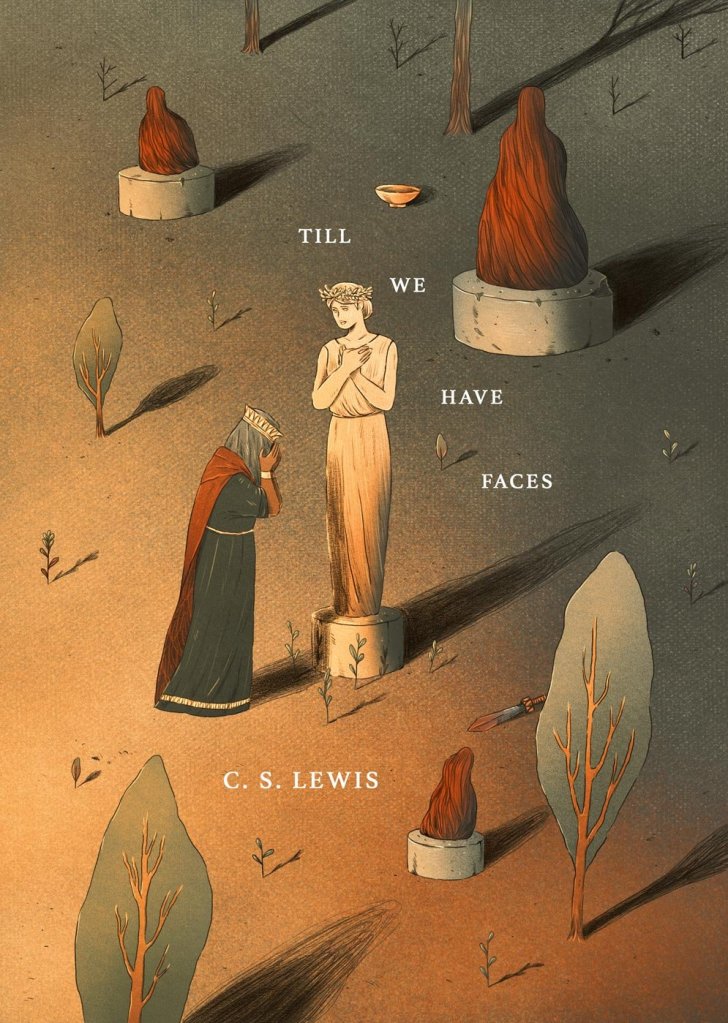
Till We Have Faces is widely acclaimed, and Lewis himself considered it to be “far and away my best book.” I was prepared to appreciate it greatly, but it fell a bit flat and felt a bit facile for me.
First, for a conversion story, it is surprisingly lacking in a sequence of obvious confession and repentance. Can we be sure that Orual has recognized all of her sins and failures?
Second, the most emotionally powerful portions of the second part—Orual’s being enabled to assist her sister in her travails—are watered down by having occurred only in dreams.
This is a specific example of a wider problem: the second part is rushed and didactic; it hardly has the character of story, has an unclear climax, and lacks the engaging nature of the first part.
While this story has great potential, much of this potential is dissipated by these weaknesses.
II
After some days’ reflection, I am compelled to confess my foolishness and retract my prior complaint.
The short nature of the second part is not necessarily a defect, nor is it lacking in story-like quality even though it is functioning as a different kind of narrative from the first part. This structure in fact mirrors the pattern of accusation, unmasking, and revelation that takes place at the end of a detective novel. We have been looking forward to being gathered with Poirot in the parlor for a very long time. There is a definitive climax and it is that accusation-revelation.
I am increasingly struck by the nature of the title and Orual’s corresponding statement, “How can they meet us face to face till we have faces?” By this Orual means that our innermost character, which we often keep hidden even from ourselves, is fully exposed. Orual’s complaint is her confesssion, because it is a compulsive vomiting of all of the ugliness and bitterness that she held inside. Her wearing a veil to cover her physical ugliness was a symbol of this greater masking; but ironically her obsession with her outer mask was part of how she hid from herself the existence of this greater mask.
Orual is physically unmasked and then unmasks her inner self, revealing “my real voice.” Her confession that “Yes,” she was answered is her repentance; she recognizes the thorough ugliness of it all. And this is the climax of the story.
But this is not a typical detective story; it is a Chestertonian one. The climactic revelation is followed by a second revelation. And this second revelation is not primarily that Orual’s dreams have a different meaning, but that her whole life is shot through with a different meaning.
The ways that Orual sacrificially helps her sister appear to occur entirely in dreams. But this does not necessarily mean that Orual is not actually suffering or giving of herself. In fact, since Orual’s life and strength are so suddenly and greatly weakened, it seems she is genuinely suffering through the course of these dreams. But in addition to this, Orual’s entire life has been consumed by a desire—selfish, but real—for the good of Psyche. In her confession and repentance, this desire is purified and, I suggest, Orual’s lifelong prayers are equally purified, and answered by the gods as such.
But it is also significant that the one real, non-dreamlike, active, and lifelong participation that Orual is revealed to have had in Psyche’s suffering was to serve as a harm, as an obstacle and temptation. The thought that Orual thus contributed to her sister’s maturation, purification, and sanctification does not seem immediately as beautiful or as emotionally powerful as the thought that Orual had helped her sister through other trials. But it is beautiful; a deeper, darker kind of beauty. What’s more, the reciprocal nature of this exchange, of this shared salvation, is more obvious than it is in the other exchanges—Psyche, in passing the test, herself becomes a means of Orual’s obtaining forgiveness and salvation.
If anyone intends the journey to Berea, let him bring this book for a traveling companion.
I indeed baptize you with water unto repentance, but He who is coming after me is mightier than I, whose sandals I am not worthy to carry. He will baptize you with the Holy Spirit and fire. (Matthew 3:11 NKJV)
First of all, I am not a language scholar and I hesitate to make much of a preposition.
Second, John’s baptism is not the same thing as Trinitarian baptism, so we should hesitate to make straight-line applications from John to Jesus and his church. In a manner of speaking, John was bringing faithful covenant people back to life after their having come into contact with death. By contrast, Jesus by baptism brings people into his covenant for the first time, bringing them to life once and for all.
Nevertheless, the idea of a baptism being unto or toward repentance is significant. Rather than baptism being, as Robert Stein would have it, a mere synecdoche for a faith-repentance-baptism sequence, this shows that baptism is in fact a performance of repentance. Just as James teaches us that faith must be performed in order to be fully realized, so too repentance must be performed in order to be fully realized.
This by itself is not proof of paedobaptism, though it is highly consistent with paedobaptism and paedofaith. But it is proof against a facile credobaptism: if you require someone to repent before their baptism, you are in a sense requiring the impossible.
And for yourself, may the gods grant you Your heart’s desire, a husband and a home, And the blessing of a harmonious life. For nothing is greater or finer than this, When a man and woman live together With one heart and mind, bringing joy To their friends and grief to their foes.” —Homer, Odyssey, Book 6, trans. Stanley Lombardo

 I gotta have my orange juice.