Archive for the ‘Biblical Theology’ Category
All prophesy
Paul speaks of all prophesying in 1 Cor 14:
But if all prophesy, and an unbeliever or an uninformed person comes in, he is convinced by all, he is convicted by all. (1 Cor 14:24)
It seems common to take the idea of “all” prophesying as hyperbolic. But I recently suggested that one possible way to read this is “all worship” or especially “all worship in the vernacular.”
James Rogers suggests the same:
Paul, for example, observes that when “the whole church assembles together” and “all prophesy”—in this context “prophecy” almost certainly means “to speak God’s word” (1 Cor 14:26, cf. Heb 4:12) . . . . (Hell Shall Not Prevail, 5)
A Hagar bricolage
I listened to Wilson’s American Milk and Honey recently. Parts of it are great, but parts of it not so great. Following are some thoughts on Romans 11, in no particular order.
Wilson’s strongest point, I think, is to wonder how the fullness of the Gentiles could possibly be said to have arrived in the first century. I don’t think his concern holds up on reflection; it seems that the semantic scope of “come in” readily includes “entered” or “come into life,” or inaugurated. This inauguration is completed and sealed in AD 70, when the old man and the new man are fully united in the church. Gentiles are now a part of the priestly people, fully initiated as heirs to every single promise as those promises are magnified and transfigured in Jesus.
James Jordan makes an interesting point about the promises attached to the covenant name of Yahweh:
For I, Yahweh your God, am a jealous God, visiting the iniquity of the fathers upon the children to the third and fourth generations of those who hate Me, but showing mercy to thousands, to those who love Me and keep My commandments. (Exodus 20)
Jordan’s point is that the visitation of iniquity is simultaneously both a threat and an act of mercy. Ever since the garden, and in spite of outward appearances from time to time, God has not allowed wickedness to outgrow and outpace his kingdom, but rather brings it to an end. The fourth generation is a limit on his vengeance and a means of bringing wickedness to a complete end. If it were the case that Romans 11 was still waiting for a future fulfillment, then we would have to deny that God’s mercy outran his judgment in this way. We would have to say that God was, strangely, preserving wickedness just as scrupulously and carefully as he preserves righteousness.
Imagine the prophet Nathan writing the following in David’s day. Israel converted from king Saul to king David in seven years. I believe that it is no strange thing to say that they converted to king Jesus in forty:
I say then, have Benjamin and Israel stumbled that they should fall? Certainly not! But through their fall, to provoke them to jealousy, salvation has come to Judah. Now if their fall is riches for the land, and their failure riches for Judah, how much more their fullness!
For I speak to you Judah; inasmuch as I am an apostle to Judah, I magnify my ministry, if by any means I may provoke to jealousy those who are my flesh and save some of them. For if their being cast away is the reconciling of the land, what will their acceptance be but life from the dead?
For if the firstfruit is holy, the lump is also holy; and if the root is holy, so are the branches. And if some of the branches were broken off, and you, being a wild olive tree, were grafted in among them, and with them became a partaker of the root and fatness of the olive tree, do not boast against the branches. But if you do boast, remember that you do not support the root, but the root supports you.
You will say then, “Branches were broken off that I might be grafted in.” Well said. Because of unbelief they were broken off, and you stand by faith. Do not be haughty, but fear. For if God did not spare the natural branches, He may not spare you either. Therefore consider the goodness and severity of God: on those who fell, severity; but toward you, goodness, if you continue in His goodness. Otherwise you also will be cut off. And they also, if they do not continue in unbelief, will be grafted in, for God is able to graft them in again. For if you were cut out of the olive tree which is wild by nature, and were grafted contrary to nature into a cultivated olive tree, how much more will these, who are natural branches, be grafted into their own olive tree?
For I do not desire, brethren, that you should be ignorant of this mystery, lest you should be wise in your own opinion, that blindness in part has happened to Benjamin and Israel until the fullness of Judah has come in. And so all Israel will be saved, as it is written:
“The Deliverer will come out of Zion,
And He will turn away ungodliness from Jacob;
For this is My covenant with them,
When I take away their sins.”Concerning David they are enemies for your sake, but concerning the election they are beloved for the sake of the fathers. For the gifts and the calling of God are irrevocable. For as you were once disobedient to God, yet have now obtained mercy through their disobedience, even so these also have now been disobedient, that through the mercy shown you they also may obtain mercy. For God has committed them all to disobedience, that He might have mercy on all.
The latter Saul of the tribe of Benjamin understood this principle so well because he had lived all his life in the good of this great conversion to king David.
Tongues and Prophecy
In this essay I explore what Paul means by prophecy and tongues in his first letter to the Corinthians. I suggest that:
- By “prophecy” Paul generally means the church’s corporate prayer and especially singing, especially in the vernacular; and
- By “tongues” Paul means worship in Hebrew rather than in the vernacular.
Prophecy
I take it for granted that 1 Corinthians 11 is addressing corporate worship, including Paul’s dealings with head coverings. This poses a problem: why does Paul countenance women’s praying and prophesying in corporate worship, when in chapter 14 he requires them to be silent?
We know that there is a sense in which prophecy can essentially mean spiritual song, as it does in the case of Saul and the company of prophets in 1 Samuel chapters 10 and 19. I suggest that this is the sense in which Paul is speaking of prayer and prophecy in chapter 11. Setting aside the question of whatever is meant by head covering, the prayer and prophecy that he is referring to must be the corporate prayer and song of the assembled church; this is within the extent of the words, and it is only at this point in the service that women are not silent.
Let’s consider whether this pattern holds in the more difficult passage of chapter 14.
Tongues
Chapter 14 is difficult to parse. Few interpretations make sense of the apparent contradictions in this passage. Paul does not wish to pray without understanding—and yet he speaks in tongues more than the Corinthians. Tongues are a sign to unbelievers (I assume this is unbelieving Jews)—and yet the Corinthians are not to speak in uninterpreted tongues lest the unbelievers fail to be convicted.
The charismatic interpretation that glossa = glossolalia seems to align with the general idea of unintelligibility that Paul is expressing, but it does not address Paul’s apparent contradictions. Worse, it is inconsistent with other occurrences of tongues in the NT, which generally seem to refer to known human languages. Moving from charismatic to cessationist interpretations, I’m intrigued by James Jordan’s observation that the church likely worshipped next to the Jewish synagogue (see Acts 18:7). The fact that the church’s worship would have been in Greek underscores the prophecy from Isaiah 28 that Paul cites. However, if we take glossa simply to refer to the church’s worshipping in Greek, this makes no sense of Paul’s argument, since it suggests that Greek may be unintelligible, and implies that he is forbidding worship in uninterpreted Greek.
There are a number of cases in the New Testament where God enacts an ironic reversal of old covenant realities. For example, Matthew 2:15 cites Hosea, identifying Jesus’s flight from Israel with Israel’s flight from Egypt; Israel herself has become the new Egypt, and Herod the new Pharaoh. In Galatians 4, Paul categorizes Israel as children of Hagar rather than Sarah. Paul, in Romans 3, quotes Psalm 14, identifying Israel not with “my people” and “the righteous” in that Psalm, but instead with the foolish and corrupt workers of iniquity. Paul understands that there has been a great and ironic reversal of loyalty and fortune for Israel.
Consider another likely reversal: by this time the Jewish diaspora has largely lost their familiarity with Hebrew. Hebrew itself has become an “other tongue” for God’s people. When Hebrew is spoken in the synagogue, God’s people do not hear him. Even before the reign of Jesus is preached in Corinth, Isaiah’s prophecy has already begun to be fulfilled. This is a good thing in itself; God’s word is going to many lands and languages (witness the Septuagint), just as he intended. It is not even a bad thing that Aramaic becomes the vernacular in the land of Israel. What transforms all this into a judgment is that Israel refuses to listen to and obey this word. The capstone of this judgment is that it will be pronounced in a foreign tongue.
This lends a double meaning to Isaiah’s prophecy. It is already a shame to Israel that her disapora cannot hear God in Hebrew. On top of this, it is a further shame that the proclamation of Messiah’s reign is being made week to week in Greek but they do not respond. What Paul refers to as “tongues” appears in this light to be, ironically, some kind of fascination with Hebrew, or perhaps even some kind of Judaizing conviction that the Corinthian church has toward Hebrew (perhaps especially when it comes to singing the Psalms); whereas “prophecy” is the church’s ordinary corporate worship in the vernacular Greek.
Paul is not writing this way to be clever or to confuse us; rather, he is making a devastating point about how Israel has become wholly deaf to God in every language whatsoever. Israel is no longer able to hear in Hebrew, and apparently unwilling to hear him in Greek. It is essential that God’s proclamation through his church be heard and understood by all. If the church were to worship in Hebrew, it must be interpreted or else none will understand. Although it is a shame to Israel regardless of whether worship take place in Hebrew or in Greek, unbelieving Jews will be convicted and provoked to jealousy only if they hear in Greek. God is giving Israel one final test to see whether they are deaf to him. For the sake of the church and for the sake of Israel, the church must worship in the vernacular—or at least must explain all Hebrew speech in the vernacular.
What a reformation this represents! At last God’s people hear him (c.f., Acts 2). At last God’s people can participate in genuine worship.
All those who have studied Hebrew, or remember a little from grammar school, or have memorized a little, must not be puffed up; they must not be little Judaizers. Paul, who speaks Hebrew more than all the Corinthians, gladly sets it aside. To the Greek speakers, he becomes as a Greek speaker. “How shall we sing Yahweh’s song in a foreign land?” We shall sing it in the vernacular.
Let’s walk through chapter 14 and see how this reading holds together:
1 Pursue love, and desire the spiritual, but especially that you worship in the vernacular.
Worship in spirit and truth is worship united together with God’s people on the foundation of the Spirit-breathed word.
2 For he who speaks in Hebrew does not speak to men but to God, for no one understands; however, in the spirit-breath he speaks mysteries.
3 But he who worships in the vernacular speaks edification and exhortation and comfort to men.
4 He who speaks in Hebrew edifies himself, but he who worships in the vernacular edifies the church.
It is difficult to understand how glossolalia could edify; Hebrew makes far more sense here in the case of those who understand it or who may have memorized some Hebrew and also its meaning.
5 I wish you all spoke in Hebrew, but even more that you worship in the vernacular; for he who worships in the vernacular is greater than he who speaks in Hebrew, unless indeed he explains, that the church may receive edification.
Paul genuinely wishes that we all studied the original languages, but this is not his priority. Note that the word for interpret here has a range that includes explanation and expounding.
6 But now, brethren, if I come to you speaking in Hebrew, what shall I profit you unless I speak to you either by revelation, by knowledge, by proclaiming in the vernacular, or by teaching?
Here it makes sense that we would understand the use of prophesying as referring specifically to the preaching portion of worship.
7 Even things without life, whether flute or harp, when they make a sound, unless they make a distinction in the sounds, how will it be known what is piped or played?
8 For if the trumpet makes an uncertain sound, who will prepare for battle?
9 So likewise you, unless you utter by the tongue words easy to understand, how will it be known what is spoken? For you will be speaking into the air.
Here Paul is speaking of the human tongue.
10 There are, it may be, so many kinds of voices in the world, and none of them without significance.
11 Therefore, if I do not know the meaning of the voice, I shall be a foreigner to him who speaks, and he who speaks, a foreigner to me.
12 Even so you, since you are zealous for the spiritual,let it be for the edification of the church that you seek to excel.
13 Therefore let him who speaks in Hebrew pray that he may explain.
Here again interpret means explanation rather than translation.
14 For if one prays in Hebrew, his spirit-breath prays, but his understanding is unfruitful.
Paul here is using personification, as he often does. I’ve written this as “one” to clarify. He is not referring to himself but to Corinthians who may have memorized some Hebrew—hocus pocus—without understanding. Such a man does not even edify himself, let alone others.
15 What then? We will pray with the spirit-breath, and we will also pray with the understanding. We will sing with the spirit-breath, and we will also sing with the understanding.
I have adjusted Paul’s personification to “we.”
16 Otherwise, if you bless with the spirit-breath, how will he who occupies the place of the uninformed say “Amen” at your giving of thanks, since he does not understand what you say?
Paul switches to “you,” confirming his earlier personification.
17 For you indeed give thanks well, but the other is not edified.
18 I thank my God I speak in Hebrew more than you all;
19 yet in the church I would rather speak five words with my understanding, that I may teach others also, than ten thousand words in Hebrew.
20 Brethren, do not be children in understanding; however, in malice be babes, but in understanding be mature.
21 In the law it is written:
“With men of other tongues and other lips
I will speak to this people;
And yet, for all that, they will not hear Me,”
says the Lord.
22 Therefore Hebrew is for a sign, not to those who believe but to unbelieving [Jews]; but worshipping in Greek is not for unbelieving [Jews] but for those who believe.
23 Therefore if the whole church comes together in one place, and all speak in Hebrew, and there come in those who are uninformed or unbelieving [Jews who do not know Hebrew], will they not say that you are out of your mind?
24 But if all worship in Greek, and an unbelieving [Jew] or an uninformed person comes in, he is convinced by all, he is convicted by all.
25 And thus the secrets of his heart are revealed; and so, falling down on his face, he will worship God and report that God is truly among you.
26 How is it then, brethren? Whenever you come together, each of you has a psalm, has a teaching, has a word in Hebrew, has a revelation, has an explanation. Let all things be done for edification.
I don’t think it is necessary to view this as a free-for-all worship service. In the verses that follow, I take Paul to be addressing the elders, those who prophesy (i.e., preach and proclaim) in the service. Often this is the case when he writes to “brothers,” and it is self-evident that he is writing here to those who speak in the service. Corinth is disorderly and it is little surprise this disorder extends to and likely originates with the men who rule and teach. But even if you believe Corinthian worship to have been very nearly Quaker in form, it seems evident that Paul is referring to Hebrew and Greek in these verses.
In these verses, I take the sense of prophecy to be narrowed from corporate worship specifically to preaching and proclamation.
27 If anyone speaks in Hebrew, let there be two or at the most three, each in turn, and let one explain.
28 But if there is no one to explain, let him keep silent in church, and let him speak to himself and to God.
29 Let two or three preach in the vernacular, and let the others judge.
30 But if anything is revealed to another who sits by, let the first keep silent.
31 For you can all preach in the vernacular one by one, that all may learn and all may be encouraged.
32 And the spirit-breath of the preachers are subject to the preachers.
33 For God is not the author of confusion but of peace, as in all the churches of the saints.
34 Let your women keep silent in the churches, for they are not permitted to speak; but they are to be submissive, as the law also says.
35 And if they want to learn something, let them ask their own husbands at home; for it is shameful for women to speak in church.
36 Or did the word of God come from you? Or was it you only that it reached?
37 If anyone thinks himself to be a preacher or spiritual, let him acknowledge that the things which I write to you are the commandments of the Lord.
38 But if anyone is ignorant, let him be ignorant.
39 Therefore, brethren, desire earnestly to worship and preach in the vernacular, and do not forbid to speak in Hebrew.
Preachers everywhere are greatly relieved.
40 Let all things be done decently and in order.
Amen.
Summary
This interpretation seems to make better sense of this passage, resolving the apparent contradictions. Paul touches on tongues and prophecy in chapters 12–13 as well. In chapter 12 it seems possible that Paul is referring not just to knowledge of Hebrew but to skill with languages in general. Chapter 13 underscores some of the fleshly reasons that people may have been speaking in Hebrew.
Metal men
The metal of God’s tabernacle symbolizes his people. Perhaps the clearest implication of this is that Nebuchadnezzar first takes gold from the temple together with the leaders of the land (2 Kings 24), and later takes remaining gold, silver, and a multitude of bronze together with the remaining people of the land (2 Kings 25). There is an analogy between the implements of God’s physical house and the people who form and serve in God’s spiritual house.
I know that Tarshish is not necessarily Tarsus. But there is still a linguistic connection between the two, and I think we can glimpse another example of this precious metal analogy in the person of Paul. Solomon supplies his house and God’s house with gold and silver from Tarshish:
All King Solomon’s drinking vessels were gold, and all the vessels of the House of the Forest of Lebanon were pure gold. Not one was silver, for this was accounted as nothing in the days of Solomon. For the king’s ships went to Tarshish with the servants of Hiram. Once every three years the merchant ships came, bringing gold, silver, ivory, apes, and monkeys. (2 Chronicles 9:20-21)
God brings into his kingdom another gift-treasure from Tarshish/Tarsus:
So the Lord said to him, “Arise and go to the street called Straight, and inquire at the house of Judas for one called Saul of Tarsus, for behold, he is praying. And in a vision he has seen a man named Ananias coming in and putting his hand on him, so that he might receive his sight.” (Acts 9:11-12)
Saul/Paul is gold and silver brought into God’s house.
This reminds me of the great reversal between Psalm 68 and Ephesians 4. While Psalm 68 says that God receives gifts:
You have ascended on high,
You have led captivity captive;
You have received gifts among men,
Even from the rebellious,
That the LORD God might dwell there. (Psalm 68:18)
Paul reverses this in Ephesians:
Therefore He says:
“When He ascended on high,
He led captivity captive,
And gave gifts to men.” (Ephesians 4:8)
This is not because Paul is simply perpetuating Septuagint corruptions. Instead, I maintain that Paul is here applying his understanding of the union between Jesus and his church. Paul understood this union from the very moment of his conversion, when Jesus identified himself with his church:
Then he fell to the ground, and heard a voice saying to him, “Saul, Saul, why are you persecuting Me?” (Acts 9:4)
What is happening in Ephesians is that Jesus is receiving gifts from the nations—gifts such as Paul himself. In the very act of receiving these gifts he also sets them free and gives them to his own body, his church.
Metábasis eis állo génos (4-1)
Malapropism of the day: clock pot.
The only sane program of national defense begins with right worship:
For the nation and kingdom which will not serve you shall perish,
And those nations shall be utterly ruined. (Isaiah 60:12)
The last enemy that will be destroyed is death. As a down payment against this sure promise, the first place to be inhabited by the first body to die no more was a tomb.
What does the Westminster catechism say is the chief end of man—“To glorify God and to be brokenhearted before him forever”? (Brad Hodges)
Then a man came from Baal Shalisha, and brought the man of God bread of the firstfruits, twenty loaves of barley bread, and newly ripened grain in his knapsack. And he said, “Give it to the people, that they may eat.”
But his servant said, “What? Shall I set this before one hundred men?”
He said again, “Give it to the people, that they may eat; for thus says the LORD: ‘They shall eat and have some left over.’ ” So he set it before them; and they ate and had some left over, according to the word of the LORD. (2 Kings 4:42-44)
Jesus, who fed such bread to thousands, and now feeds billions each week, is the head of the new school of prophets, which is his church. Like Elisha, his pastors have the firstborn’s double portion of his spirit with which to feed his people.
The inauguration of the Lord’s Supper was not the last Passover: that came 40 years later. Jesus, the latter Jehu (2 Kings 10), gathered the idolaters together for a great sacrifice, made doubly sure that his people were not among them, surrounded them, and destroyed them.
God scourges a people when he sets them under childless pagan women like Jezebel and Athaliah. But he also brings about restoration by means of his church, as with Elisha and Jehoiada.
Philip K. Dick wrote this provocative short story on abortion: The Pre-Persons.
Psalm 91 is worth reading in detail, but what makes it so important is that it is not a prayer for protection, it is an outright statement the believer will be guarded against all sorts of harm. No ifs or buts. This is what God shall do. (Philip Jenkins)
Metábasis eis állo génos (3-25)
The future turns into the past. But also the past turns into the future.
The word ekklesia appears in the gospels. Fortunately Jesus spends a great deal of time defining this surprising new word for his puzzled disciples. This is how we learn that the church is a new kind of noncorporeal body (TM), whose primary nature is invisible rather than visible, and which excludes children from membership. The word covenant isn’t entirely new to the disciples, however. Jeremiah first introduces us to it: “This is the covenant that I will make with some of the house of Israel after those days, says the Lord: I will put my grace in some of their minds, and write it on some of their hearts; and I will be the God of some of them, and some of them shall be my people. . . Some of them shall know me, from the middlest of them to the greatest of them.”
Joseph understands Girard and Friedman. Families and churches must guard against quarrels even during the best of times:
So he sent his brothers away, and they departed; and he said to them, “See that you do not become troubled along the way.” (Genesis 45:24, NKJV)
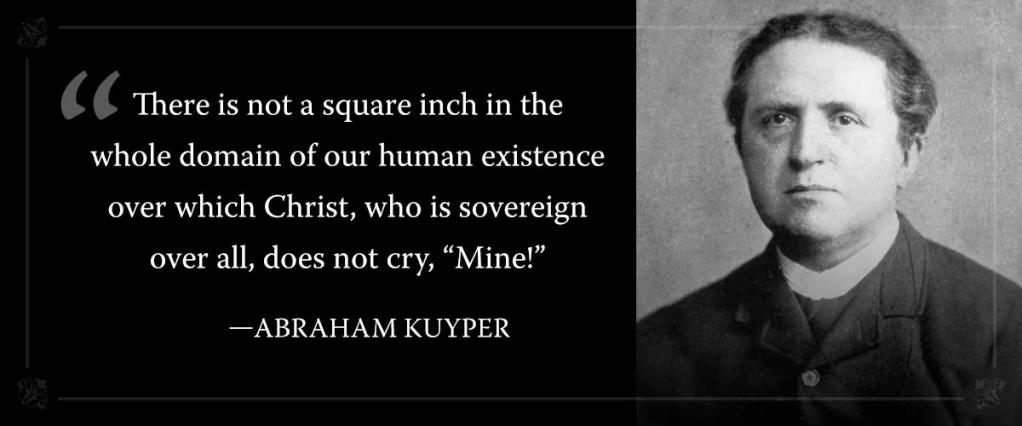
Kuyper’s got it all: Christian individuals, Christian families, Christian businesses, Christian art and music, Christian localism, Christian nationalism, even Christian cosmos. So: baptize your babies, sing Psalms against tyrants, and raise a glass to the king of kings!
Everyone who is clean in your house may eat it. (Numbers 18, NKJV)
For the unbelieving husband is sanctified by the wife, and the unbelieving wife is sanctified by the husband; otherwise your children would be unclean, but now they are holy. (1 Corinthians 7:14, NKJV)
Thus, paedocommunion! Thanks to Michael Burdge for this connection.
Metábasis eis állo génos (3-21)
I came to send fire on the earth, and how I wish it were already kindled! But I have a baptism to be baptized with, and how distressed I am till it is accomplished! (Luke 12:49-50, NKJV)
I rarely think about the fact that Jesus was baptized twice: first, as his priestly ordination, and second, absorbing the deluge that was meant for us and for the entire old world. We are baptized into the benefit of this; we are those who escape the flood and the Red Sea.
But He answered and said to them, “An evil and adulterous generation seeks after a sign, and no sign will be given to it except the sign of the prophet Jonah. For as Jonah was three days and three nights in the belly of the great fish, so will the Son of Man be three days and three nights in the heart of the earth. The men of Nineveh will rise up in the judgment with this generation and condemn it, because they repented at the preaching of Jonah; and indeed a greater than Jonah is here. The queen of the South will rise up in the judgment with this generation and condemn it, for she came from the ends of the earth to hear the wisdom of Solomon; and indeed a greater than Solomon is here. (Matthew 12:39-42, NKJV)
That generation was spared by the work of Jesus for forty years.
Genesis 2 reminds us that there is a category of “not good” that is distinct from “evil.” Jordan points out three great themes in Scripture: that of redemption, that of holy war, but also that of maturation. Often we are faced with the challenge of having to wrestle with an amalgam of not–good and evil. The sharpening and winnowing process God is undertaking now will slowly separate these out. At this point I’m still working for a multinational corporation but I don’t think that can continue indefinitely.
Matthew Henry the Christian nationalist on Matthew 28:
. . . Christianity should be twisted in with national constitutions, . . . the kingdoms of the world should become Christ’s kingdoms, and their kings the church’s nursing-fathers. What is the principal intention of this commission; to disciple all nations. Matheµteusate–“Admit them disciples; do your utmost to make the nations Christian nations;” not, “Go to the nations, and denounce the judgments of God against them, as Jonah against Nineveh, and as the other Old-Testament prophets” (though they had reason enough to expect it for their wickedness), but “go, and disciple them.” Christ the Mediator is setting up a kingdom in the world, bring the nations to be his subjects; setting up a school, bring the nations to be his scholars; raising an army for the carrying on of the war against the powers of darkness, enlist the nations of the earth under his banner. The work which the apostles had to do, was, to set up the Christian religion in all places, and it was honourable work; the achievements of the mighty heroes of the world were nothing to it. They conquered the nations for themselves, and made them miserable; the apostles conquered them for Christ, and made them happy.
I’ve criticized the many evangelical songs that tell of a personal conversion story, since their narrative doesn’t really match the experience of our children compared to how the Psalms speak. But Paul in Ephesians does give us a model for speaking this way, only he does it using the language of historia salutis rather than ordo salutis:
Therefore remember that you, once Gentiles in the flesh—who are called Uncircumcision by what is called the Circumcision made in the flesh by hands—that at that time you were without Christ, being aliens from the commonwealth of Israel and strangers from the covenants of promise, having no hope and without God in the world. But now in Christ Jesus you who once were far off have been brought near by the blood of Christ. (Ephesians 2:11-13, NKJV)
Remember that you were once lost!
Wise men know this without becoming bitter. (Doug Wilson, Joy at the End of the Tether, speaking of political corruption)
Plow
Some preliminary thoughts on this passage from Luke 9 after discussing with a friend:
Now it happened as they journeyed on the road, that someone said to him, “Lord, I will follow you wherever you go.”
And Jesus said to him, “Foxes have holes and birds of the air have nests, but the Son of Man has nowhere to lay his head.” Then he said to another, “Follow me.”
But he said, “Lord, let me first go and bury my father.”
Jesus said to him, “Let the dead bury their own dead, but you go and preach the kingdom of God.”
And another also said, “Lord, I will follow you, but let me first go and bid them farewell who are at my house.”
But Jesus said to him, “No one, having put his hand to the plow, and looking back, is fit for the kingdom of God.” (Luke 9:57-62, NKJV)
It seems that plowing here is correlated with preaching the kingdom, given both the passage itself and the surrounding paragraphs.
I lean towards reading this with the same filter as the parables; namely that it is part of an overall covenant lawsuit against Israel and her shepherds and should be read corporately first of all. The appearance of the 70 (TR) underscores this. So does the lack of place for Jesus’s head; that is not a generic calling for us for all time.
But there’s always a secondary application to the church today and her shepherds, and to individuals. “Don’t you be like those branches that were cut off; they are an example for you.” This makes me think of Lot’s wife in particular. Plowing in the rest of the Bible supports these broader secondary applications.
Leithart offers this chiasm for Luke 9-19, centered around Jerusalem. There’s some beginning (Zacchaeus) and continuing to walk in faithfulness in the matching passage. I want to read the parable as corporate/shepherds first then individuals too.
I would be careful not to apply it woodenly to the pastoral ministry, especially in case of extenuating circumstances (bivocational pastor in changing circumstances; or someone impacted by ecclesiastical politics and shenanigans). I think we can discern between someone who still treasures God’s people and is giving himself somehow to the kingdom (in its fullest sense), versus someone who is longing for Sodom or Egypt or the former days.
But even the pastor still in full-time ministry needs to guard against longing for the former days.
Maturation
She also gave to her husband with her, and he ate. Then the eyes of both of them were opened. (Gen. 3:6–7)
He took bread, blessed and broke it, and gave it to them. Then their eyes were opened. (Luke 24:30–31)
Hat tip: Timothy Crouch via Mark Horne
Metábasis eis állo génos (3-12)
We need to be laughing:
He who sits in the heavens shall laugh;
The Lord shall hold them in derision. (Psalm 2:4, NKJV)
From the archives: my review of Greg Gilbert’s little book on the gospel.
Alex Berenson writes: “The only question left is not how much good but how much damage those miracle shots have done.”
You gotta raise your kids to become your curators of music. This week I’ve really enjoyed Sarah Sparks (thank you, Charlotte!):
and David Francey (thank you, Ivy!):
 I gotta have my orange juice.