Archive for June 2025
Forgiven
You asked if there was anything in my congregation that could not be naturally accounted for by an unbelieving skeptic. My answer would be emphatically yes, but you will think me cheating when I tell you what they are. My congregation is filled with people who have been washed in the blood of the lamb, who have had their sins forgiven, who have been justified, and sanctified. No naturalist can account for any of these things. They have come to participate in the salvation of God. You will accuse me of begging the question, and of assuming what I need to prove, but my point is that the naturalist begs the question himself. He pretends he is searching for evidence that his epistemological grid has already ahead of time dogmatically declared cannot exist. So even if a man were to rise from the dead there would be a natural explanation for it and could not mean what, say, the Apostle Paul says it means. . . .
I can sympathize with your account of spending (I assume) heart-breaking time trying to find a miracle, or a clarity and experience of God in your earlier years, and not finding it. I went through something very similar, and spent a number of years close to despair at the “brass heavens.” God was nowhere. For all of my desperation, I could not “find” him. Then I met some people who were able to help me. What they helped me to see was that if we are to find God, and to find a real and living experience of Christ, it will be in the midst of a moral war that I must wage with myself. The only way that Christ can ever be found is when I’m thrown on, most specifically, an utter need for a Savior who can save me from sin. That meant I had to begin to take sin seriously in a way that I never had before. Before (and I was raised in the church), I was caught up in seeking “experiences,” and happiness, and (in a youthful way) success (of which I had little of any adolescent sort). (Rich Bledsoe, Can Saul Alinsky Be Saved?, 115-116)
Fire
God inaugurates his covenant administrations with exceptional works of the Holy Spirit, normally accompanied by heavenly fire. Examples include:
- Genesis 3:24, the flaming sword of the cherubim
- Genesis 15:17, the smoking oven and burning torch that appear to Abram
- Exodus 3:2, God’s appearance to Moses in the burning bush
- Leviticus 9:24, fire from God lights Moses’ altar
- 2 Chronicles 7:1-3, fire from God lights Solomon’s altar
- 1 Kings 18:38, fire from God lights Elijah’s altar
- Zechariah 3:2, Joshua the high priest is described as a brand plucked from the fire by God
- Acts 2:3, fire appears on the church at Pentecost
Genesis 2 is an interesting case. God breathes into Adam the breath of life, commissions him, and fashions a bride for him. At this point Adam is called by a new name—ish, or man. It is commonly pointed out that this word is a likely pun for esh, or fire.
The pattern we see above validates this connection. God’s inaugurating his covenant with man as steward of creation is a life-giving work of the Holy Spirit, which involves heavenly fire that lights a new fire that man must preserve.
Fair and excellent
“All things are hard which are fair and excellent.” (Dedication to Queen Elizabeth, The Geneva Bible, 1560 edition)
Silence the avenger
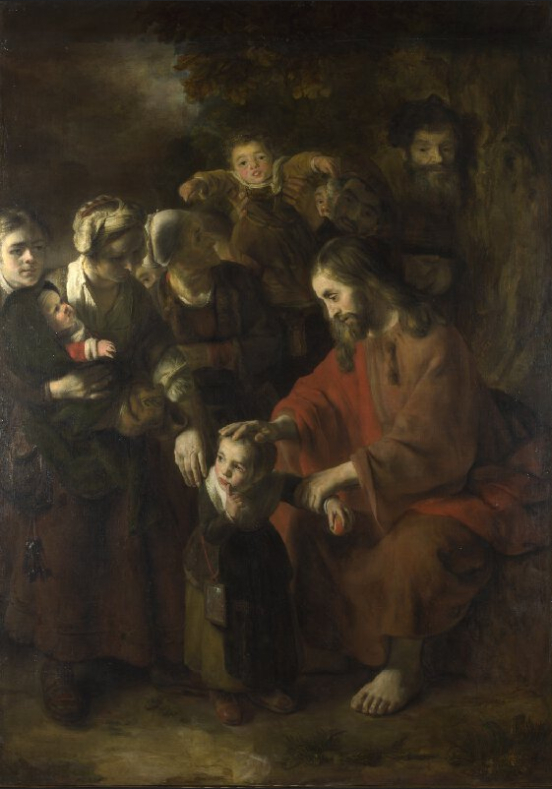
Twice in the last few months I have checked myself when quoting Psalm 8:
Out of the mouth of babes and nursing infants
You have ordained strength,
Because of your enemies,
That you may silence the enemy and the avenger.
The word “avenger” feels out of place. Why would it be necessary for infants to silence the kinsman redeemer-avenger? As it turns out, the word for avenger here is a more general term, possibly even conveying the idea of self-vengeance.
Jesus quotes Psalm 8 in Matthew 21:
But when the chief priests and scribes saw the wonderful things that he did, and the children crying out in the temple and saying, “Hosanna to the Son of David!” they were indignant and said to him, “Do you hear what these are saying?”
And Jesus said to them, “Yes. Have you never read, ‘Out of the mouth of babes and nursing infants you have perfected praise’? ”
Jesus leaves off the latter part of the verse, but we cannot avoid hearing its echo. Jesus is accusing the chief priests and scribes of having become God’s enemies, of seeking to avenge themselves against him and his people.
Likewise those who bar little ones from Jesus’s table. Many of them do so heedlessly rather than high-handedly. But there is still a rightful sting and shame they ought to feel as these little ones otherwise participate fully in Jesus’s worship.
 I gotta have my orange juice.
Govern
with one comment
As a precondition to discipling the nations, the church will disciple the revolutionary spirit.
She will gain the means to do so by learning to govern her own revolutionary spirit.
Relevant to this:
Written by Scott Moonen
June 25, 2025 at 7:06 am
Posted in Biblical Theology, Christ is Lord, Commentary, History